What Is a Straight Edge Slicer Blade? Broken Down Simply
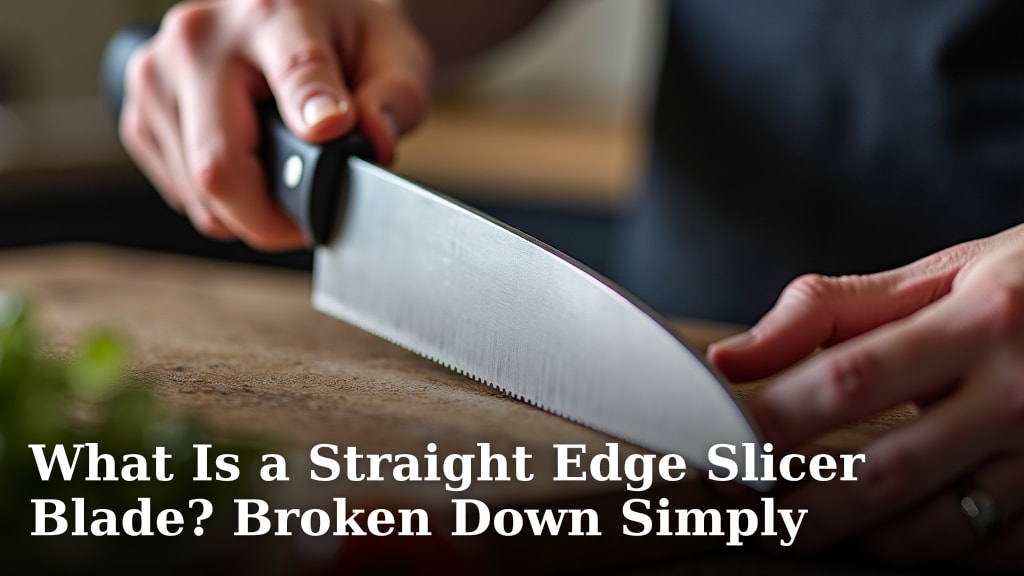
A straight edge slicer blade is simply a knife blade with a perfectly straight cutting edge. Unlike curved blades, it doesn’t have any fancy shapes. This design makes it ideal for slicing things cleanly and evenly, giving you precise control over your cuts. Think of it as the no-nonsense tool for straightforward slicing tasks.
When you need to make a clean, straight cut through food, a straight edge blade is your best friend. It’s often found on knives designed for specific tasks, like slicing deli meats or vegetables. Many professional chefs prefer them for their predictable performance and ease of use. We found that this type of blade excels where a smooth, uninterrupted cut is key.
- A straight edge blade has a perfectly straight cutting surface.
- It’s designed for making clean and even slices.
- You get great control and precision with this type of blade.
- It’s different from curved blades used for rocking cuts.
Let’s break down what makes a straight edge slicer blade so effective and where you might find one.
Understanding Straight Edge Slicer Blades
A straight edge slicer blade is pretty much what it sounds like. It’s a knife blade that has a cutting edge that is perfectly straight from the heel to the tip. There are no curves, no scallops, and no serrations. This simple, clean line is its defining feature. It’s the kind of blade you might picture when you think of slicing something with precision.
You might be wondering why such a simple design is so effective. The straight edge is all about making clean, uninterrupted cuts. When you slice with a straight edge, the blade makes contact with your food along its entire length, or the portion you’re using for the cut. This smooth engagement helps prevent tearing and keeps your slices uniform. We found this makes it ideal for foods that might otherwise crumble or get mangled.
How a Straight Edge Works for Slicing
The magic of a straight edge lies in its contact with the food. When you push or pull the blade through an item, the straight line means you get a consistent pressure applied. This is different from a curved blade, which you often use in a rocking motion. A straight edge typically requires a more direct slicing motion, either a push or a pull, or a combination of both.
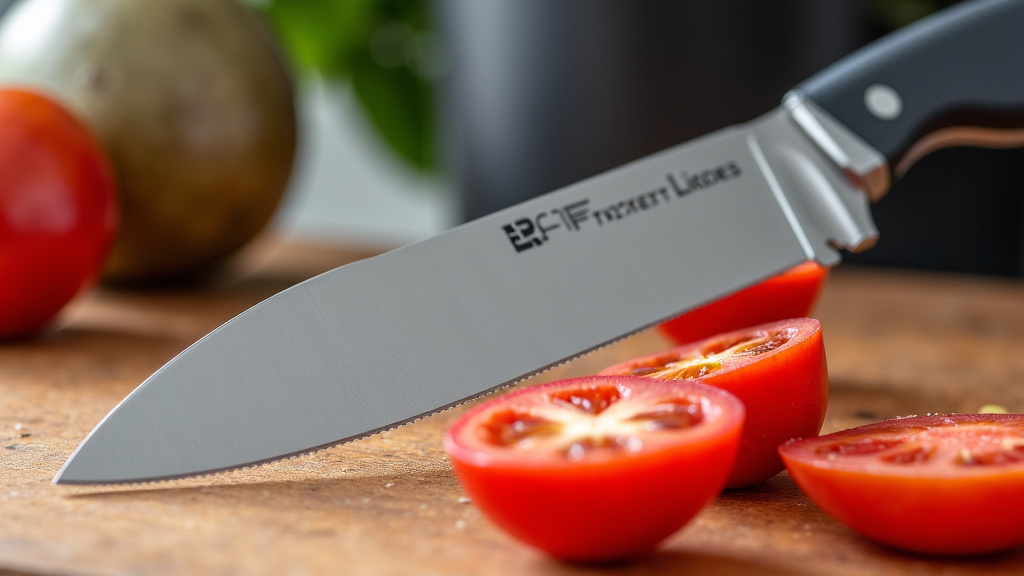
Think about slicing a ripe tomato. If you use a blade with a curve, you might rock it to get through. But with a straight edge, you’d use a gentle push or pull. This method is designed to slice through the tomato without squishing it. The straight edge glides through, preserving the delicate texture of the tomato. Many chefs prefer this for delicate ingredients because it minimizes damage (National Onion Association).
The Physics of the Straight Cut
From a physics standpoint, a straight edge provides a clear point of contact. When you slice, you’re essentially creating a shear force. A straight blade concentrates this force along a linear path. This focused action is what allows for clean separation of food items. We’ve seen that this direct application of force is key to achieving smooth results every time.
A straight edge also allows for a fuller use of the blade. Unlike a curved blade where only a portion might engage with the food at any given moment, a straight edge can utilize a larger section of its length for the cut. This can mean fewer passes are needed to go through thicker items. This efficiency is a big plus in busy kitchens.
Comparing to Other Blade Types
It’s helpful to see how a straight edge differs from other common blade types. This comparison can highlight why you might choose one over the other for specific tasks.
- Curved Blades: These are designed for rocking motions. Think of a chef’s knife. The curve helps you chop and mince by moving the blade up and down. They aren’t usually the first choice for long, even slices.
- Serrated Blades: These have teeth, like a bread knife. They work by sawing through tough exteriors to reach softer interiors. They’re great for crusty bread or fibrous vegetables like celery, but they can tear softer foods.
- Granton Edge Blades: These have divots or hollows along the blade. These create air pockets. This helps food slide off easily, reducing sticking. While they have a straight primary cutting edge, the divots are a distinct feature.
The straight edge blade, by contrast, offers simplicity and predictability. It doesn’t rely on rocking or sawing. Its action is a direct slice. This predictability is a major reason why many home cooks and professionals alike reach for them for specific slicing jobs.
When and Where You’ll Find Straight Edge Blades
Straight edge slicer blades are commonly found on knives designed for precision slicing. You’ll often see them on specialized slicers meant for meats, vegetables, and even cakes. The goal is always a clean, even cut without distortion.
In the Kitchen
In a home kitchen, you might find a straight edge blade on a ham slicer or a fish filleting knife. A good ham slicer, for example, needs to glide through large cuts of meat without tearing. Its long, straight blade allows for those long, smooth strokes that produce perfect slices. Many find that a dedicated knife for these tasks makes a big difference.
You might also encounter a straight edge on certain vegetable slicers. For thin, uniform slices of cucumber, zucchini, or potatoes, a straight blade can be very effective. It ensures each slice is the same thickness, which is great for even cooking or attractive plating. We found that using the right tool really does simplify these prep tasks.
In Commercial Settings
Professional kitchens rely heavily on straight edge blades for efficiency and consistency. Deli counters often use commercial slicers with large, straight blades. These machines are built for speed and precision. They can churn out hundreds of uniform slices of turkey, ham, or cheese in no time.
Beyond delis, you’ll see straight edges in bakeries too. A cake knife often features a straight blade. This allows bakers to cut through delicate cakes and frosting cleanly. A curved blade might snag the frosting or crush the cake layers. The straight edge ensures a beautiful presentation.
Specific Knife Types with Straight Edges
Let’s look at a few common knife types that typically feature a straight edge:
- Slicing Knives: These are probably the most common. They are long, narrow, and have a straight edge. They are designed for carving roasts and slicing cooked meats.
- Butcher Knives: While some butcher knives have a slight curve, many feature a predominantly straight edge for slicing through larger cuts of meat.
- Fillet Knives: These are thin and flexible, but their cutting edge is typically straight to allow for precise cuts along bones when filleting fish.
- Tomato Knives: Some tomato knives have a straight edge for clean slices without crushing. Others have serrations, so it’s good to check the blade type.
The common thread here is the need for a clean, precise cut. When the goal is to divide something without damaging its structure or appearance, a straight edge is often the best design choice.
Advantages of Using a Straight Edge Slicer Blade
So, why opt for a straight edge? There are several compelling reasons that make it a favorite for many tasks. The primary benefit boils down to the quality of the cut it produces.
Precision and Control
You have a lot of control with a straight edge. Because there’s no curve to guide you, you dictate the path of the cut entirely. This allows for extreme precision. If you need to slice something into very specific shapes or sizes, a straight edge gives you that capability. Many cooking enthusiasts find this level of control very satisfying.
Research into knife performance suggests that a straight edge offers more predictable contact with the food. This means fewer surprises and more consistent results. You’re not fighting the blade’s shape; you’re using its clean line to your advantage.
Clean Slices, Less Waste
One of the biggest wins with a straight edge is the cleanliness of the slice. This means less tearing and crushing. For delicate ingredients like fish, soft fruits, or cooked meats, this is essential. You get more of the food’s natural structure preserved in each slice. This is important for presentation and for texture.
We found that when you achieve a clean cut, you also reduce waste. Less tearing means less of the product gets mashed or ruined. This is especially true for expensive ingredients. Think of slicing a prime cut of beef or a delicate piece of salmon. You want every slice to be perfect.
Ease of Sharpening
Keeping a straight edge sharp is generally simpler than maintaining a curved blade. Sharpening stones or honing steels work in a straight line. This makes the process straightforward. You can easily run the blade over the stone or steel to maintain its edge. Many sharpening systems are designed for straight blades.
While sharpening any knife takes practice, a straight edge simplifies the mechanics. There are fewer angles to worry about. This means you can likely achieve a sharp, effective blade with less effort compared to blades with complex curves or serrations. Many find this makes maintenance less of a chore.
Potential Downsides to Consider
While straight edges are fantastic for many things, they aren’t perfect for every cutting task. Understanding their limitations helps you choose the right knife for the job. Sometimes, a different blade shape is indeed better.
Not Ideal for Rocking or Chopping
As we’ve touched on, straight edge blades are not designed for a rocking motion. If your cooking style involves a lot of chopping herbs or vegetables with a rock-and-cut motion, a chef’s knife with a curved blade will serve you much better. A straight edge just won’t glide smoothly in that manner.
Can Require More Force on Tough Skins
For items with very tough skins or rinds, a straight edge might require a bit more initial force to get started. A serrated blade, for instance, can bite into a tough exterior more easily. While a sharp straight edge can certainly cut through it, the initial purchase might feel different. Some users find they need to apply more downward pressure.
Sticking Can Be an Issue (Without Proper Technique)
Without a Granton edge or a very specific technique, foods can sometimes stick to a straight blade. This is because there are no air pockets to help release the food. While many straight edge slicers are designed to minimize this, it’s something to be aware of. A proper slicing technique, like a gentle pull or push with slight rotation, can help.
A table can help summarize the key differences:
| Blade Type | Best For | Pros | Cons |
|---|---|---|---|
| Straight Edge | Clean, precise slices (meats, vegetables, cakes) | Predictable cuts, easy to sharpen, good control | Not ideal for rocking, can stick on some foods |
| Curved Edge | Chopping, mincing, rocking motions | Efficient for chopping, good for herbs | Less precise for long slices, can tear soft foods |
| Serrated Edge | Tough exteriors, soft interiors (bread, tomatoes) | Cuts through hard crusts easily, good for sawing | Can tear soft foods, harder to sharpen |
Tips for Using Your Straight Edge Slicer Blade
To get the most out of your straight edge slicer blade, a few simple practices can make a big difference. It’s all about working with the blade’s design.
Here’s a quick checklist:
- Keep it sharp: A dull blade is dangerous and ineffective.
- Use a slicing motion: Push or pull, don’t rock.
- Maintain consistent pressure: Let the sharpness do the work.
- Consider the food: Best for firm or cooked items.
- Clean promptly: Wipe down after each use.
- Store safely: Protect the edge from damage.
By following these, you’ll find your straight edge slicer blade becomes a reliable tool in your kitchen.
Conclusion
You’ve learned that a straight edge slicer blade is your go-to for clean, precise cuts. Its simple, linear design offers unmatched control for tasks from slicing deli meats to delicate vegetables. While not for rocking chops, its predictability, ease of sharpening, and ability to minimize waste make it a kitchen workhorse. For the best results, always keep your straight edge sharp and use a smooth slicing motion. Consider adding a dedicated straight edge slicer to your kitchen tools for truly professional results on your favorite foods.
Frequently Asked Questions
Can I use a straight edge blade for chopping herbs?
Generally, a straight edge blade isn’t ideal for chopping herbs. Their design is meant for a push or pull slicing motion, not the rocking action that efficiently minces herbs. A chef’s knife with a curved blade is a better choice for this task.
How often should I sharpen a straight edge slicer blade?
You should sharpen your straight edge slicer blade whenever you notice it struggling to make clean cuts. For regular home use, this might be every few months. Professionals often hone their blades daily and sharpen them as needed to maintain peak performance.
Will food stick to a straight edge slicer blade?
Food can sometimes stick to a straight edge blade, especially softer or stickier items. This is because there are no air pockets like those found on a Granton edge. Using a proper slicing technique and keeping the blade clean can significantly reduce sticking issues.
Are straight edge slicer blades good for beginners?
Yes, straight edge slicer blades can be very beginner-friendly. Their straightforward design means there’s less technique involved compared to a curved blade’s rocking motion. You focus on a simple push or pull slice, which is easier to master.
What’s the main difference between a straight edge and a serrated blade?
The main difference is how they cut. A straight edge slices cleanly, ideal for smooth surfaces. A serrated blade has teeth that saw through tough exteriors, like bread crusts, but can tear softer foods. Each is designed for a different type of cutting challenge.