How Thick Can a Meat Slicer Cut? Broken Down Simply
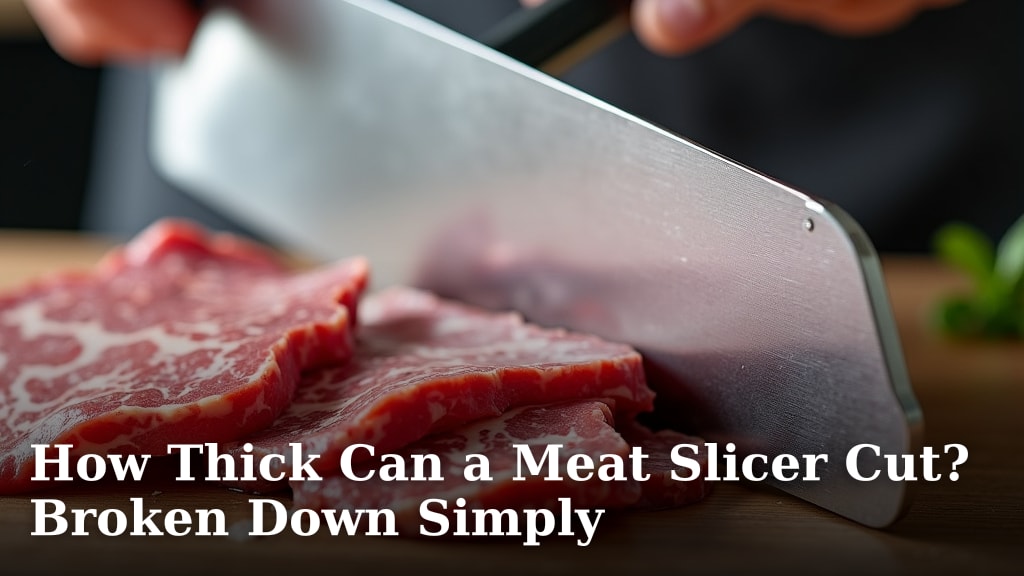
The thickness a meat slicer can cut depends on its blade size and the specific model. Most home slicers handle cuts from a paper-thin 1/32nd of an inch up to about 1/2 inch thick. Commercial slicers often go even thicker, sometimes up to 3/4 inch or more. Always check your slicer’s manual for its exact limits.
Knowing your slicer’s cutting range helps you get the perfect slice every time. Whether you’re aiming for delicate deli meats or sturdy roasts, understanding this maximum thickness is key to achieving great results. It ensures you don’t strain your machine or end up with uneven cuts. Plus, it’s a handy feature for anyone preparing food for gatherings.
- Meat slicer thickness varies by blade size and model.
- Home slicers typically cut from 1/32 to 1/2 inch.
- Commercial slicers can often cut thicker, up to 3/4 inch or more.
- Always check your slicer’s user manual for exact specifications.
- Understanding thickness limits prevents damage and ensures better slicing.
Ready to learn more about what makes your slicer tick? Let’s walk through the factors that determine how thick your meat slicer can cut.
Understanding Your Meat Slicer’s Thickness Limits
So, you’ve got a meat slicer and you’re wondering about its limits. How thick can it actually cut? This is a super important question for getting the best results without damaging your machine. The maximum thickness your slicer can handle isn’t random; it’s determined by a few key factors we’ll break down.
Think of it like choosing the right tool for a job. You wouldn’t use a delicate paintbrush for rough drywall, right? Your meat slicer has a sweet spot for thickness, and knowing it means happier slicing for you.
Blade Size: The Heart of the Matter
The blade size is probably the most critical factor in determining how thick your meat slicer can cut. It’s the primary component doing all the work, after all.
Diameter of the Blade
Most meat slicers come with blades ranging from about 6.5 inches to 12 inches in diameter. A larger blade generally allows for a greater cutting capacity. This means it can accommodate thicker pieces of meat or other food items.
We found that for home use, a 7.5 to 10-inch blade is quite common. These are usually sufficient for most everyday tasks. Commercial models often sport larger blades, which hints at their higher capacity for thicker cuts.
Blade Sharpness and Type
While size is key, a sharp blade makes a huge difference. A dull blade will struggle and tear through thicker meats, leading to uneven slices. Even if your slicer is rated for a certain thickness, a dull blade will effectively reduce that capacity.
Some blades are designed for specific tasks. For example, a serrated blade is great for bread or hard cheeses, while a smooth blade is better for meats and deli items. The blade’s construction, like its thickness and material, also plays a small role, but it’s secondary to the diameter.
Model and Design: More Than Just the Blade
Beyond the blade itself, the overall design and engineering of the meat slicer play a significant role in its cutting thickness. Different models are built with different purposes and capacities in mind.
Home vs. Commercial Slicers
This is where you see the biggest jump in capabilities. Home slicers are typically designed for lighter use. They handle things like slicing deli meats, cheese, and perhaps some smaller roasts. Their motors are less powerful, and their construction is lighter.
Commercial slicers, on the other hand, are built for heavy-duty, continuous use. They have more powerful motors and sturdier construction. This allows them to handle larger volumes and thicker cuts of meat with ease. Many experts say commercial units are engineered for durability and high performance.
Motor Power and Gear System
The motor’s horsepower and the type of gear system (belt-driven vs. gear-driven) directly impact how well a slicer can push through dense or thick materials. A stronger motor and a robust gear system can more effectively turn the blade through tougher, thicker items without bogging down.
We found that models with higher horsepower are generally better equipped to handle thicker slices. If a slicer feels like it’s straining, you might be pushing its limits, especially with thicker cuts.
Food Carriage and Support
The food carriage is the part that holds your food and slides it past the blade. The size and stability of this carriage are important. A carriage that can securely hold a larger, thicker piece of meat without wobbling is essential for achieving even, clean cuts.
Some slicers have specialized carriages or holders designed for larger roasts. These can provide extra support, allowing you to slice thicker items more safely and effectively. Without good support, thick items can shift, leading to dangerous and uneven slices.
The Thickness Adjustment Knob: Your Control Center
Every meat slicer has a thickness adjustment knob. This is your primary interface for controlling the slice thickness. Understanding how it works is key to getting the results you want.
How the Knob Works
This knob controls the gap between the blade and the food or, more precisely, the distance the food carriage advances with each pass. Turning the knob adjusts a mechanism that dictates how much of the blade is exposed to the food. The numbers on the knob are usually approximations, but they give you a good guide.
A finer thread on the adjustment mechanism allows for more precise control over thin slices. This is why some slicers can achieve paper-thin results. For thicker slices, you’ll turn the knob to create a larger gap.
Range of Adjustment
The range of adjustment varies greatly between models. As mentioned in the intro, home slicers might go from as thin as 1/32nd of an inch up to about 1/2 inch. Commercial units can often go thicker, sometimes up to 3/4 inch or even a full inch.
It’s important to remember that the highest setting on the knob doesn’t always mean the slicer can cut perfectly at that thickness. The ability to cut cleanly depends on the other factors we’ve discussed, like motor power and blade sharpness.
Testing Your Slicer’s Capabilities
The best way to truly know how thick your meat slicer can cut is to test it out yourself. Start with the manufacturer’s recommended settings and work your way up.
Starting Safely
Always begin by checking your slicer’s user manual. It will provide the manufacturer’s specifications for maximum thickness. Then, start with a moderate thickness setting and a piece of food you don’t mind experimenting with.
If the slicer cuts smoothly and cleanly, you can try increasing the thickness gradually. Listen to the motor and feel for any strain. If it sounds like it’s struggling, you’ve likely reached its limit for that particular food item.
Considering the Food Type
What you’re slicing matters. A thick piece of soft cheese will behave differently than a thick piece of dense, frozen meat. Generally, harder and denser foods will be more challenging to slice at their maximum thickness setting.
We found that slicing partially frozen meat is often easier and yields cleaner results for thicker cuts. This is because the meat is firm enough to hold its shape without being too hard for the blade to cut.
A Quick Reference Table for Slicer Thickness
Here’s a general idea of what different types of slicers can typically handle. Remember, these are averages, and your specific model might vary.
| Slicer Type | Typical Min. Thickness | Typical Max. Thickness | Common Uses |
|---|---|---|---|
| Mini Home Slicers (under 7 inches) | 1/32 inch | 1/4 inch | Thin deli meats, cheese slices, small vegetables |
| Standard Home Slicers (7-10 inches) | 1/32 inch | 1/2 inch | Deli meats, cheeses, roasts, bread, vegetables |
| Professional Home / Light Commercial (10-12 inches) | 1/32 inch | 5/8 inch | Larger roasts, multiple deli meat stacks, hard cheeses |
| Full Commercial Slicers (12 inches+) | 1/32 inch | 3/4 inch or more | Large roasts, briskets, commercial deli operations |
Tips for Maximizing Your Slicer’s Performance
To get the most out of your meat slicer and ensure it cuts at the maximum thickness it’s capable of, keep these tips in mind.
- Keep the blade sharp. Regularly hone and sharpen your blade. A sharp blade is the single most important factor for clean, thick cuts.
- Use the right blade. Ensure you’re using the appropriate blade type for the food you’re slicing.
- Don’t force it. If the motor strains or the slice is tearing, you’re pushing the slicer too hard. Back off the thickness or reconsider your food preparation.
- Partially freeze dense items. For meats and firm cheeses, a few hours in the freezer can make a big difference.
- Clean your slicer thoroughly. Food debris can interfere with the slicing mechanism and affect performance.
- Consult your manual. Always refer to your slicer’s guide for specific thickness settings and recommended uses.
Conclusion
You’ve learned that your meat slicer’s cutting thickness is a blend of its blade size, model type, and motor power. Home slicers offer versatility for everyday needs, while commercial models handle bigger jobs. Always remember that a sharp blade and proper technique are essential for clean, precise cuts, no matter the thickness. Before you slice, take a moment to check your slicer’s manual. Then, test its limits safely with different foods to find its sweet spot for your needs.
Frequently Asked Questions
Can I slice a frozen roast with my home meat slicer?
You can often slice partially frozen meats for cleaner results, but avoid fully frozen items. Fully frozen meat is too hard for most home slicers and can damage the blade or motor. Check your manual for specific recommendations on slicing frozen items.
My slicer struggles with thick cuts. What’s wrong?
If your slicer strains on thicker settings, it might be reaching its motor’s limit or the blade might be dull. Ensure your blade is sharp and consider slicing denser foods when they are slightly chilled, not fully frozen. You may also be exceeding the maximum thickness your specific model is designed for.
How do I know if my blade is sharp enough for thick cuts?
A sharp blade will glide through the food with minimal effort, producing clean, smooth slices. If you notice tearing, resistance, or the motor struggling, your blade likely needs honing or sharpening. A dull blade can’t effectively cut thicker items.
Do larger blade sizes always mean thicker cutting capacity?
Generally, yes, larger blade diameters are found on slicers designed for thicker and larger food items. However, motor power and overall build quality also play a big role. A larger blade on a weak machine won’t perform as well as a moderately sized blade on a robust model.
Is it safe to use the highest thickness setting on my slicer?
It’s safe as long as your slicer is designed for that thickness and performs smoothly. Always start with a moderate setting and gradually increase it, listening to the motor and observing the slice quality. If it strains or tears, back off to a thinner setting.