Does Blade Angle Affect How Easy Slicing Is? A Full Guide
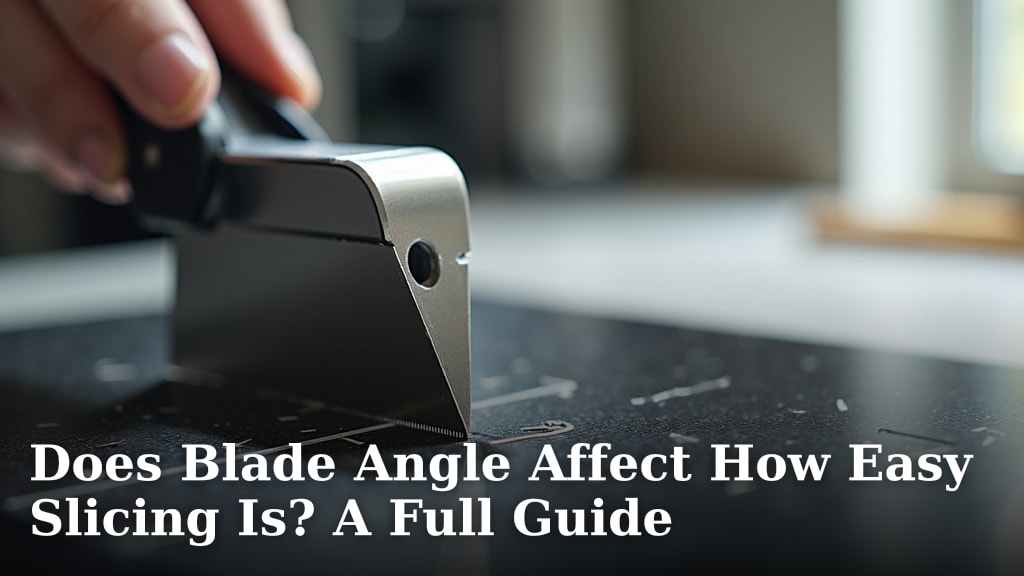
Yes, the blade angle absolutely affects how easy slicing is. A sharper, more appropriate angle helps your knife glide through food with less effort, making prep work a breeze. You’ll find that the right angle can make a huge difference in your kitchen tasks.
When we talk about blade angle, we’re really discussing the degree to which the blade edge is ground. This angle impacts how well the knife cuts through different materials, from soft tomatoes to tough meats. Understanding this can help you choose the right knife for the job and keep your current knives performing their best.
- Blade angle matters for ease of slicing.
- Sharper angles cut more easily.
- The angle affects how the knife interacts with food.
- Different foods may benefit from different angles.
Let’s break down exactly what blade angle means and how it influences your slicing experience.
Understanding Your Knife’s Blade Angle
So, how does that angled edge on your knife actually work? It’s all about the geometry of the blade. Think of it like a tiny ramp that helps the knife push through food. The steeper the ramp, the easier it is to slide over things. The gentler the ramp, the more it might sink in.
When we talk about blade angle, we’re referring to the width of the “V” shape at the very edge of your knife. This angle is measured in degrees. It’s ground onto the metal to create a sharp cutting surface. This shape is what does the actual slicing work.
What is Blade Angle?
The blade angle is the total angle formed where the two bevels (the sloped sides of the blade) meet at the very edge. Imagine two little hills sloping down to a sharp peak. That peak is the edge, and the angle between those two hills is the blade angle.
You’ll often see angles talked about as one side or two sides. A Japanese knife might have a single, very sharp angle on one side. A Western knife typically has two angles, one on each side, meeting in the middle. We usually refer to the total angle when discussing ease of slicing.
Why Angle Matters for Slicing
The angle directly affects how the knife behaves when it meets food. A sharper angle, meaning fewer degrees, creates a thinner, more delicate edge. This thinner edge can slip through delicate items with less resistance.
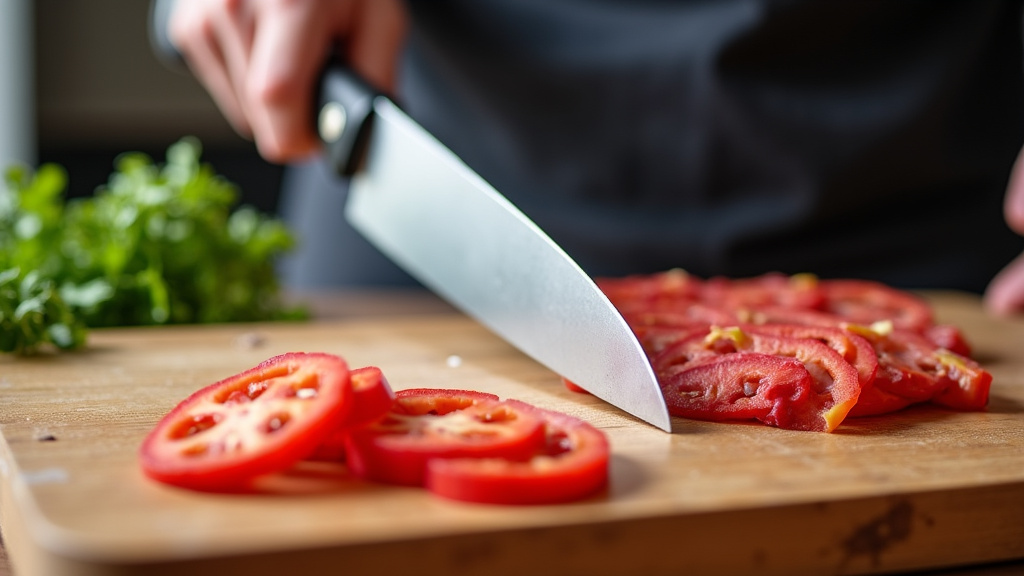
Think about trying to cut through a soft tomato. You want a blade that can slice cleanly without crushing it. A narrower angle helps achieve this. It acts like a sharp point that pierces and slides through with minimal force.
On the flip side, a wider angle provides a more robust edge. This means it’s less likely to chip or dull quickly. However, it will require a bit more force to push through certain foods.
Different Angles for Different Tasks
It’s not a one-size-fits-all situation when it comes to blade angles. Different tasks and types of food benefit from different degrees of sharpness and strength at the edge.
Western vs. Japanese Knife Angles
Many common Western-style kitchen knives, like chef’s knives or Santoku knives, typically have a double bevel. The angle on each side is usually between 15 and 22 degrees. This gives a total angle of 30 to 44 degrees.
“This type of angle provides a good balance of sharpness and durability,” says the Culinary Institute of America. “It’s suitable for most general kitchen tasks.”
Japanese knives, on the other hand, often feature a single bevel, or a very small secondary bevel. The primary angle can be as low as 10 to 15 degrees. This creates an extremely sharp edge that’s ideal for precision work.
These knives are often used for tasks like sushi making or intricate vegetable carving. They require a gentler touch and a very keen edge. They are not typically used for heavy chopping or prying.
Angle Recommendations for Foods
The type of food you’re cutting can also guide your choice of blade angle. For soft fruits and vegetables, like tomatoes or peaches, a sharper, narrower angle is best. This helps you slice without mushing them.
For tougher tasks, like slicing through meat or root vegetables, a slightly wider angle can be more appropriate. This gives the edge more strength to stand up to the resistance without becoming damaged.
Here’s a quick guide:
| Food Type | Recommended Angle (Total) | Why? |
|---|---|---|
| Soft Fruits/Vegetables (Tomatoes, Peaches) | 15-25 degrees | Easily slices without crushing. |
| General Purpose (Onions, Carrots) | 25-35 degrees | Good balance of sharpness and durability. |
| Meats/Tougher Foods | 30-40 degrees | More durable edge to handle resistance. |
The Impact of Sharpness
It’s important to remember that angle and sharpness are closely related, but not the same thing. A sharp knife has an edge that is properly aligned and free of microscopic damage. Even a knife with a wider angle can feel sharp if it’s well-maintained.
Conversely, a knife with a very narrow angle can feel dull if the edge is damaged or not properly honed. Think of a razor blade versus a butter knife. The razor has a very narrow angle and is extremely sharp. The butter knife has a wide, rounded edge and is dull.
When we talk about ease of slicing, we’re looking at the combination of the blade’s angle and its overall sharpness. Both play a vital role.
Maintaining Your Knife’s Edge
To ensure your slicing remains effortless, you need to take care of your knife’s edge. This involves both sharpening and honing.
Sharpening vs. Honing
Sharpening is the process of actually removing metal to create a new, sharp edge. This is typically done with sharpening stones or electric sharpeners. Sharpening addresses dullness and can restore a damaged edge.
Honing, on the other hand, realigns the microscopic teeth of the blade’s edge. It doesn’t remove much metal. A honing steel or ceramic rod is used for this. Regular honing keeps an already sharp knife performing at its best between sharpenings.
How Often Should You Sharpen/Hone?
How often you need to sharpen depends on your knife and how you use it. For most home cooks, a good sharpening every 6-12 months is often sufficient.
Honing should be done much more frequently. Many chefs hone their knives before or after every use. For home use, honing once a week or whenever the knife feels like it’s losing its edge is a good habit. The American Culinary Federation suggests honing regularly to maintain performance.
Choosing the Right Angle for Resharpening
When you sharpen your knife, you want to try and maintain the original factory angle. If your knife has a 15-degree angle per side, try to replicate that. Using a guided sharpening system can help ensure you hit the correct angle consistently.
If you’re unsure of your knife’s original angle, consider its intended use. For most general-purpose knives, aiming for a 17-20 degree angle per side is a safe bet. This provides a good blend of sharpness and durability for everyday tasks.
Key Takeaways for Easy Slicing
To wrap things up, remember these points about your knife’s blade angle and how it affects your slicing experience:
- The blade angle is the degree of the edge, impacting how easily it cuts.
- Western knives typically have wider angles (30-44 degrees total) for durability.
- Japanese knives often use narrower angles (10-15 degrees per side) for precision.
- Sharper angles cut more easily through soft foods, while wider angles are more durable.
- Regular honing and occasional sharpening are key to maintaining a keen edge.
- Choosing the right angle for your tasks makes prep work much simpler.
Conclusion
You’ve learned that your knife’s blade angle plays a big role in how smoothly it cuts. A narrower angle makes for easier slicing through delicate foods, while a wider angle offers more durability for tougher tasks. Remember, both the angle and the sharpness of your blade work together to give you that effortless glide.
To keep your kitchen tasks enjoyable, focus on maintaining your knives properly. Keep them sharp and honed regularly. Now, you’re ready to select the right knife for the job and enjoy a much smoother prep experience!
Frequently Asked Questions
Is a sharper blade angle always better for slicing?
Not always. While a sharper, narrower angle cuts more easily through soft foods like tomatoes, it can also be more prone to damage. For tougher tasks like chopping dense vegetables or meat, a slightly wider angle provides better durability. For tougher tasks, consider a gravity feed meat slicer for better durability.
How can I tell if my knife has a narrow or wide angle?
You can often tell by the appearance of the very edge. Narrow angles look very fine and sharp. Wider angles appear a bit more robust or thicker at the edge. If you’re unsure, check the knife’s specifications or consult the manufacturer.
Do I need different knives for different angles?
It helps. Japanese knives often have narrower angles suited for delicate work, while Western knives typically have wider angles for general durability. Understanding these differences helps you choose the best tool for specific cutting jobs.
Can I change the blade angle on my existing knife?
You can change the angle by sharpening, but it requires skill. If you try to alter the angle significantly, you might weaken the blade or change its intended performance. It’s usually best to maintain the factory angle unless you’re experienced with knife sharpening.
How does the steel type affect how well the blade angle cuts?
The type of steel influences how well the blade holds an edge at a certain angle. High-carbon stainless steel, for example, can often hold a very sharp, narrow angle longer than softer steels. This means the steel type impacts the practical sharpness and durability you experience.