What Is a Semi Automatic Meat Slicer? Here’s What to Know
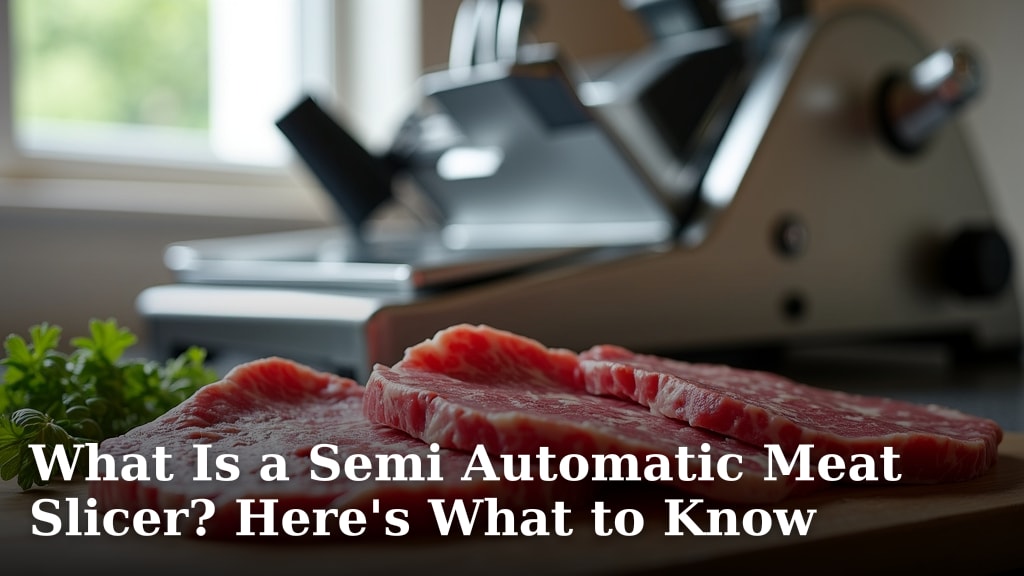
A semi-automatic meat slicer is a kitchen appliance that uses a motor to spin a circular blade, but you still guide the food into it by hand. Think of it as the middle ground between a fully manual slicer and a commercial, fully automatic machine. It’s designed to make slicing safer and more consistent for your home kitchen.
Most experts say this type of slicer offers a great balance of convenience and control. You get the speed of a powered blade without the complexity or price of a fully automatic model. It’s perfect for slicing deli meats, cheeses, and veggies with even thickness every time, which a regular knife just can’t match.
- A semi-automatic slicer has a motorized blade but requires you to manually feed the food.
- It offers more power and consistency than a manual slicer but less than a fully automatic one.
- Ideal for home cooks who slice deli meats, cheeses, or vegetables regularly.
- Key features include blade size, motor power, and an adjustable thickness knob.
- Considerations include safety features, ease of cleaning, and your typical use case.
Now, let’s break it down further so you can see exactly how it works, what to look for, and whether it’s the right fit for your kitchen.
How a Semi-Automatic Meat Slicer Works in Your Kitchen
You press a button, and the circular blade starts spinning. That’s the motor doing the heavy lifting. But you still control the food’s speed. You hold the meat or cheese and guide it toward the blade. It feels like a safe, controlled partnership between you and the machine.
Think of it like a power drill. The drill provides the power, but you guide it. Many home cooks find this style of slicer much easier than pushing a heavy piece of meat across a manual blade. It reduces arm fatigue and lets you focus on getting the perfect slice.
The core process is simple. The motor turns the blade at a constant speed. Your job is to move the food carriage. This gives you the final say on how fast slices come off. It’s a straightforward system that balances automation with your hands-on control.
The Role of the Motor and Blade
The motor is the heart of the machine. It powers the blade, usually at a set speed. A stronger motor can handle denser foods like hard cheese without slowing down. The blade itself is always a sharp, circular disc. It spins continuously, ready for your next slice.
Most models use a blade between 7 and 10 inches in diameter. A larger blade can handle bigger cuts of meat. A smaller one is more compact for home storage. The motor and blade work together to create a smooth, even cutting action.
Your Role: The Manual Feed System
This is what makes it “semi” automatic. You don’t just load food and walk away. You place the food on a sliding carriage or platform. Then, you push it toward the spinning blade with your hand or a handle. You control the pressure and speed.
This manual feed gives you great precision. You can slow down for delicate items like tomato slices. Or go faster for thicker cuts of roast beef. It’s all about your touch and the settings you choose on the machine.
Key Components of a Semi-Automatic Slicer
Before you buy, it helps to know the main parts. Each component plays a role in how well your slicer performs and how safe it is to use. Let’s look at the essential features you’ll encounter.
- Blade: The sharp, rotating disc that does the cutting.
- Motor: The electric power source that spins the blade.
- Food Carriage: The platform where you place your food.
- Thickness Knob: A dial to adjust how thick or thin your slices are.
- Gauge Plate: A metal plate that controls the distance from the blade.
- Safety Guards: Shields and features to protect your fingers.
The Blade and Its Sharpening
The blade quality is critical. A dull blade won’t slice cleanly. It can tear meat or cheese. Most semi-automatic slicers come with a built-in sharpener. This is a huge convenience. You can sharpen the blade without removing it.
Regular sharpening keeps the blade effective. We found that a well-maintained blade cuts more safely. A dull blade requires more force, which can be risky. A sharp blade does the work for you, needing less pressure.
Adjusting Thickness: The Gauge Plate
How do you get paper-thin prosciutto or thick pepperoni? It’s the thickness knob. This dial moves the gauge plate. The plate sets how much food is exposed to the blade. A small turn can change slice thickness dramatically.
Most home models offer a range from nearly paper-thin to about half an inch. This range covers most of what you’ll need. For deli meats, 1/16 to 1/8 inch is common. For veggies, you might go thicker. It’s easy to experiment.
How Does It Compare to Other Slicers?
Choosing a slicer can be confusing. The market has manual, semi-automatic, and fully automatic models. A semi-automatic slicer sits in the middle. It offers more power than a manual one but less automation than a commercial machine.
Many experts say the semi-automatic is the sweet spot for home use. It gives you the speed and consistency you want. You don’t need the power or cost of a restaurant-grade slicer. It’s built for a home kitchen.
| Feature | Manual Slicer | Semi-Automatic Slicer | Fully Automatic Slicer |
|---|---|---|---|
| Power Source | Arm strength only | Electric motor | Electric motor |
| Blade Action | You push food across blade | Motor spins blade; you feed food | Motor spins blade; machine feeds food |
| Consistency | Can be uneven | Very consistent | Extremely consistent |
| Safety | Higher risk if not careful | Good safety features | Very safe, minimal handling |
| Ideal For | Occasional, small tasks | Regular home use, deli meats, veggies | Restaurants, very high volume |
| Price Range | Low | Medium | High |
When to Choose a Semi-Automatic Model
Ask yourself a few questions. Do you slice meat or cheese more than once a week? Do you want uniform slices for sandwiches or boards? If yes, a semi-automatic is a strong choice. It saves time and effort over a manual slicer.
It’s also perfect for prepping veggies for the week. Think onion rings, cucumber slices, or potato chips. The motor does the hard work, so your hands don’t get tired. This is great for people with joint pain or less arm strength.
Benefits for the Everyday Home Cook
Why would you want one of these in your kitchen? The benefits are practical and immediate. You save time on meal prep. You get better-looking food. And you work more safely.
Let’s be honest—slicing with a knife takes skill. It’s hard to get even slices, especially with soft foods. A semi-automatic slicer removes that guesswork. It makes you look like a pro, even if you’re a beginner.
Consistency and Safety: A Perfect Pair
Even slices mean more even cooking. If you’re roasting vegetables, thick and thin pieces cook at different rates. A slicer ensures they all cook evenly. This leads to better-tasting meals.
Safety is another big plus. Food guides and guards keep your fingers away from the blade. Many models have a thumb guard. It holds the food steady while you push. This is a much safer system than holding food with your bare hands near a knife.
Saves Time on Meal Prep
Imagine slicing a pound of turkey in a few minutes. That’s what a semi-automatic slicer can do. It’s a big time-saver for busy weeknights. You can prep ingredients ahead of time for sandwiches, salads, or snacks.
This is especially helpful during holidays. Slicing a roast ham for 20 people? A slicer makes it fast and neat. You’ll spend less time in the kitchen and more time with family.
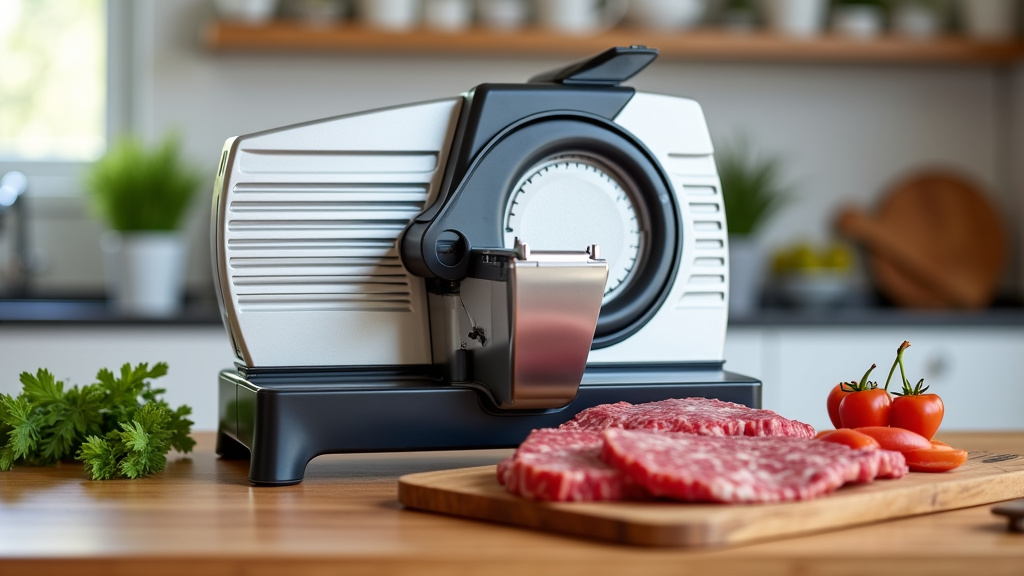
What to Look For When Shopping
Ready to buy? Focus on these key features. They will determine how well the slicer works for your needs. Don’t get distracted by flashy marketing. Stick to what matters.
- Motor Power: 100-200 watts is typical for home use. Enough for most meats and cheeses.
- Blade Size: 7-9 inches is common. Larger blades handle bigger cuts.
- Thickness Range: Look for a model that slices from thin to at least ½ inch thick.
- Material: Die-cast aluminum or stainless steel are durable and easy to clean.
- Safety Features: Look for a blade guard, food pusher, and non-slip feet.
Motor Power and Blade Size
A stronger motor (over 200 watts) is good if you slice hard cheeses or frozen meats. For most deli meats and veggies, 100-150 watts is plenty. The blade size affects capacity. A larger blade can handle a big roast beef. A smaller one is fine for standard deli packs.
We found that most home users are happy with a 7-9 inch blade. It’s a good balance of size and storage. You don’t need a 12-inch blade unless you run a small business from home.
Ease of Cleaning and Maintenance
After slicing, you’ll need to clean the machine. Look for models that disassemble easily. The blade, food carriage, and gauge plate should come off without tools. Dishwasher-safe parts are a huge bonus. It saves you time and scrubbing.
The CDC recommends cleaning kitchen equipment thoroughly to prevent foodborne illness. A slicer with fewer crevices is easier to clean. This helps keep your food safe and your machine in good shape.
Safety and Maintenance Tips for Your Slicer
Using a slicer safely is a must. The blade is sharp, and the motor is powerful. Always follow the manual’s instructions. Here are some common-sense tips to keep you safe.
First, never touch the blade when it’s plugged in. Always unplug the machine before cleaning or adjusting it. Use the food pusher, not your hands, to feed food. This is the golden rule. Your fingers will thank you.
Daily Safety Checks
Before each use, check that the blade is secure and sharp. Make sure the food carriage is locked in place. Ensure the machine is on a stable, flat surface. These quick checks take seconds and prevent accidents.
It’s also smart to keep the
Conclusion
A semi-automatic meat slicer is a smart kitchen tool that puts you in control while the motor handles the heavy cutting. It strikes a great balance between ease and precision for home cooks. You get consistent, even slices of deli meats, cheeses, and vegetables without the fatigue of a manual slicer. The key features—like motor power, blade size, and safety guards—are what make it practical for regular use. If you slice food often, investing in one will save you time and improve your meal prep. We suggest you review the features we covered and choose a model that fits your specific needs and kitchen space.
Frequently Asked Questions
Is a semi-automatic meat slicer safe to use at home?
Yes, it is designed with home safety in mind. Most models include features like food pushers, blade guards, and non-slip feet to protect your fingers. Always follow the manual, use the provided guards, and unplug the machine before cleaning. These steps make it much safer than using a sharp knife for slicing.
Can a semi-automatic slicer cut through hard cheeses and frozen meats?
It depends on the motor power. A slicer with 200 watts or more can handle semi-hard cheeses and partially frozen meats. For extremely dense or frozen items, it’s best to thaw them first. Always check the manufacturer’s guidelines to avoid damaging the blade or motor.
How often should I sharpen the blade on my slicer?
You should sharpen the blade when you notice it tearing food or requiring more force. For regular home use, that might be every few months. Most semi-automatic slicers have a built-in sharpener, making it easy to maintain without removing the blade.
What can I actually slice with this machine?
You can slice a variety of foods, including deli meats like turkey and ham, cheeses, vegetables like cucumbers and tomatoes, and even bread. It’s not recommended for bones, very hard frozen items, or extremely tough meats. Stick to boneless, firm foods for the best results.
How much space does a semi-automatic slicer need in my kitchen?
Most home models are compact, with a footprint similar to a large toaster. You’ll need counter space for the machine and room to store it, as it’s heavier than a manual slicer. Consider a model with a removable blade and components to make storage easier.