Serrated vs Smooth Slicer Blade: The Difference
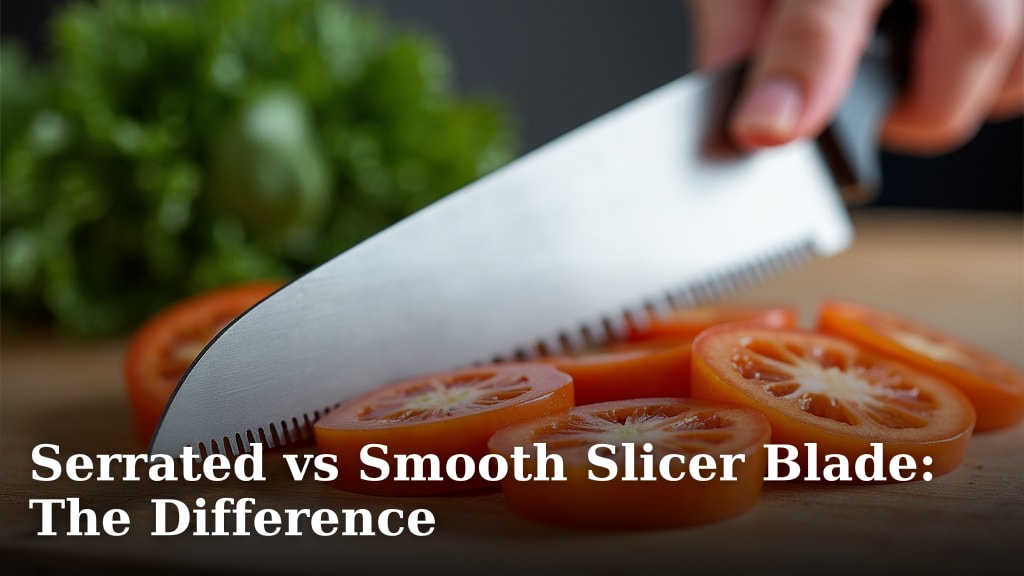
Serrated slicer blades tear through hard crusts or skins, while smooth blades make clean, precise cuts on softer foods. This is the key difference that determines which blade is right for the job. We found that picking the wrong one can turn a simple slice into a squished mess.
A smooth blade works best for chopping vegetables or trimming meat. A serrated blade is your go-to for bread, tomatoes, or anything with a tough exterior and soft inside. Many experts say that most kitchens benefit from having at least one of each type.
- Serrated blades excel at sawing
Understanding the Core Difference Between Serrated and Smooth Blades
At their heart, these blades are designed for two distinct cutting actions. A serrated blade uses a toothed edge to saw and tear through material. A smooth blade uses a straight, sharp edge to shear and slice cleanly. This fundamental difference dictates how each performs in your kitchen. Many experts point out that using the wrong one is the fastest way to ruin the texture of your food (Cleveland Clinic).
Think of it like this: a serrated blade acts like a tiny handsaw. It catches and pulls, perfect for surfaces that resist a smooth cut. A smooth blade is more like a razor, ideal for making a single, decisive pass. The goal is always to match the tool to the task for the best results.
How Serrated Blades Work: The Sawing Action
The teeth on a serrated blade are the key to its function. As you apply pressure and move the blade back and forth, the pointed tips penetrate a tough surface. The valleys between the teeth then allow the cut to open up. This sawing motion is incredibly efficient for materials that would otherwise squash or slip under a straight edge.
It’s not about being sharper; it’s about being more aggressive. We found that the serrations create multiple points of contact. This distributes the force needed to break through a crust or skin. It’s a design that prioritizes penetration over a perfectly smooth finish.
The Science of the Teeth
The shape and size of serrations matter. Wider, scalloped teeth are great for soft bread. Finer, pointed teeth are better for tough-skinned tomatoes. The size of the serration determines how much sawing is needed. This is why some bread knives look different from tomato knives. Each is optimized for a specific type of resistance.
How Smooth Blades Work: The Shearing Action
A smooth blade relies on pure sharpness and even pressure. When the edge makes contact, it separates the fibers of the food cleanly. There is no tearing or crushing involved. This creates a pristine surface on whatever you are cutting. It is the blade type that requires the most careful technique for best results.
You need a smooth, gliding motion, not a sawing one. The goal is to let the blade’s sharpness do the work. Many guides emphasize that a dull smooth blade is far more dangerous than a dull serrated one. It will slip off food instead of biting in (FDA).
When to Choose a Serrated Blade
Your serrated blade is a specialist. It excels at tasks where a smooth blade would fail. The general rule is to reach for it when dealing with a tough exterior and a soft interior. The teeth will grip the outside without compressing the delicate inside. Here are the prime candidates for your serrated knife.
Cutting Bread Without Crushing It
This is the classic test for a serrated blade. A smooth blade will press down on a loaf of crusty sourdough, flattening it before the edge breaks the crust. The teeth of a serrated blade saw gently through the hard exterior. This preserves the airy structure of the crumb inside. The result is a clean slice, not a squished pile of dough.
From Baguettes to Soft Rolls
The principle holds for all bread. Even a soft dinner roll has a thin skin. A serrated blade glides through that skin without tearing it. For delicate baguettes, this prevents the crust from shattering everywhere. It’s a small detail that makes a big difference in presentation and texture.
Slicing Tomatoes and Other Delicate Skins
A ripe tomato is a smooth blade’s nemesis. The taut, slippery skin causes the blade to slide right off. Trying to force it leads to a crushed tomato and potential injury. A serrated blade, however, catches that skin immediately. Its teeth bite in with very little pressure needed.
The same logic applies to other foods with delicate or tough skins. Think of:
- Peaches and nectarines
- Bell peppers
- Sausages with a casing
- Citrus fruits for supreming
In each case, the serrated edge eliminates the frustrating slip-and-squish scenario.
When a Smooth Blade is the Better Option
For everything else, the smooth blade is your workhorse. It’s all about precision and control. You use it when you want a clean, straight cut with minimal cellular damage to the food. This helps retain moisture and improves the final look of your dish. Most everyday chopping and dicing falls into this category.
Chopping Vegetables for Even Cooking
When you dice an onion or chop a carrot, you want uniform pieces. A smooth blade makes consistent, straight cuts. This ensures all pieces cook at the same rate. A serrated blade would create ragged, uneven pieces. Those edges would also bruise the vegetable, affecting texture and freshness.
Research from the USDA notes that clean cuts on produce help reduce nutrient loss from oxidation. A smooth blade promotes this by damaging fewer cells with each slice. It’s a healthier and more professional approach to prep work.
Trimming and Slicing Boneless Meats
For a chicken breast, pork chop, or steak, you need a smooth blade. It allows you to make thin, even slices for dishes like stir-fry or stir-fry. It also gives you clean edges for presentation. Using a serrated blade here would tear the muscle fibers. This results in a chewier, less pleasant texture after cooking.
The Exception: Crusty Roasts
There is one meat exception. A very crispy-skinned pork roast or turkey can benefit from a serrated blade. The teeth will saw through the crackling without shredding the tender meat beneath. For everything else with meat, stick with the smooth blade.
Choosing the Right Blade for Your Task
Knowing the theory is one thing. Applying it quickly in the kitchen is another. Here is a simple breakdown to help you decide in the moment.
Food or Task Recommended Blade Why It Works Crusty artisan bread Serrated Saws through hard crust without crushing soft interior. Ripe tomatoes Serrated Teeth pierce slippery skin easily. Onions, carrots, celery Smooth Makes clean, even cuts for uniform cooking. Boneless chicken or fish Smooth Creates precise slices and clean edges. Soft cheese (mozzarella) Smooth Prevents sticking and smearing. Crusty roast pork Serrated Cuts through crackling, protects the meat. Dense squash (butternut) Smooth (chef’s knife) Provides strength and leverage for hard items. Angel food cake Serrated Saws through without compressing the delicate crumb. 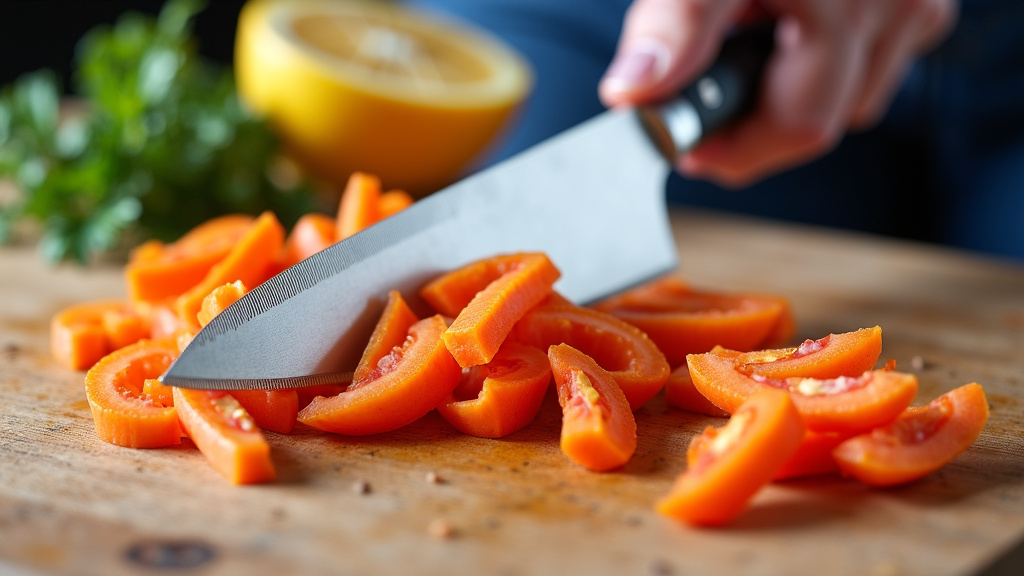
Blade Care and Maintenance
Your blades will serve you best when properly cared for. While the sharpening methods differ, the core principles of cleanliness and safe storage are the same. Good maintenance keeps you safe and makes cooking more enjoyable.
Cleaning Your Knives Safely
The dishwasher is the enemy of good knives. The harsh detergents and jostling can damage edges and handles. Hand washing with warm, soapy water is always best. Dry them immediately to prevent rust, especially on carbon steel blades. This simple habit will double the life of your cutlery.
Sharpening Each Type Correctly
Sharpening a smooth blade is straightforward. You use a honing steel or a whetstone at a consistent angle. This realigns and sharpens the edge. For serrated blades, it’s more nuanced. The individual teeth must be sharpened. This usually requires a special tapered sharpener or professional service.
Many sources recommend having serrated knives sharpened by a professional every couple of years. In the meantime, a honing rod can help maintain the alignment of the teeth. Never use a smooth-blade sharpener on a serrated edge.
Quick Blade Selection Checklist
Use this simple checklist before your next cut. It will help you build the habit of choosing right.
- Look at the food. Does it have a tough skin or crust?
- Ask: Will a straight slice just squish it?
- Is the interior soft, delicate, or airy?
- Do you need sawing motion or a single glide?
- When in doubt for bread, cake, or tomato, choose serrated.
- For all chopping, dicing, and boneless meat, choose smooth.
Conclusion
Choosing between serrated and smooth blades comes down to one core question: what does the surface of your food need? You now know to reach for a serrated blade for sawing through tough crusts and skins. You should grab a smooth blade for making clean, precise cuts on softer items. Having both in your kitchen gives you the right tool for almost any task. Your next step is simple: review the quick selection checklist in this article before your next cooking session.
Frequently Asked Questions
Can I use a serrated knife to cut vegetables?
You can, but it is not ideal for most vegetables. A serrated blade will work on tough-skinned items like tomatoes or bell peppers. However, it will create ragged, uneven pieces when chopping onions or carrots. A smooth blade is far better for creating uniform, clean cuts for even cooking.
Which knife should I use for cutting soft cheese?
For soft cheeses like mozzarella, brie, or cream cheese, a smooth blade is better. The smooth edge glides through without sticking or tearing the delicate texture. A serrated blade can cause the cheese to smear or stick in the teeth of the blade.
How often should I sharpen my kitchen knives?
For your smooth-blade knives, regular honing with a steel is key. You should sharpen them properly with a stone or professional service every six to twelve months, depending on use. Serrated knives need professional sharpening much less often, perhaps every few years.
Is a serrated bread knife good for slicing cakes?
Yes, a serrated bread knife is excellent for slicing cakes, especially delicate ones like angel food cake. The teeth saw through the crumb without compressing it, which preserves the airy texture. A smooth blade might squish softer cakes.
What’s the most important knife to own first?
Most experts recommend starting with a high-quality smooth-blade chef’s knife. It is the most versatile tool for the widest range of kitchen tasks, from chopping vegetables to slicing meat. After that, adding a serrated bread knife for bread and tomatoes is a top priority.