What Is a Commercial Meat Slicer? The Straight Answer
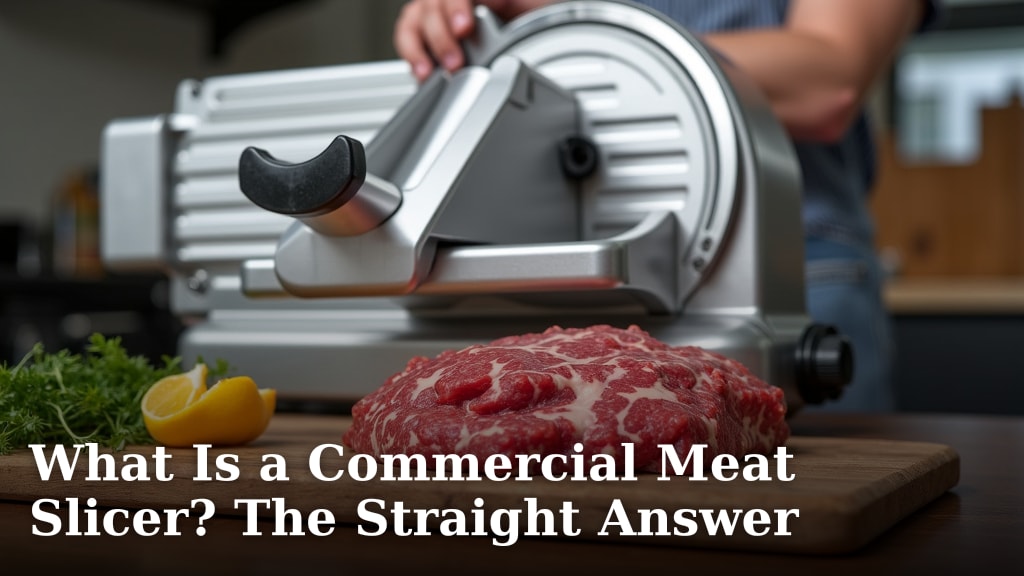
A commercial meat slicer is a kitchen machine designed to cut meat, cheese, and other foods into uniform slices quickly and efficiently. It is the essential tool used in delis, restaurants, and butcher shops to get consistent results for sandwiches, platters, and more.
Unlike a basic home model, a commercial-grade slicer is built for heavy, daily use. We found that these machines are powerful, durable, and designed for safety in a busy kitchen environment. Many experts say they are a workhorse for food preparation, saving time and reducing waste from uneven hand-cutting.
- A commercial meat slicer is a heavy-duty machine for slicing meats and cheeses uniformly.
- It is used in delis, restaurants, and butcher shops for consistent, fast preparation.
- Key features include a powerful motor, a sharp, adjustable blade, and a food carriage.
- They come in manual (gravity-fed) and automatic (electric) types, each with specific uses.
- Proper use and cleaning are crucial for safety and longevity of the equipment.
Below, we break down everything you need to know about choosing, using, and maintaining one of these machines. Let’s walk through exactly how this equipment works and what you should look for.
Conclusion
You now know a commercial meat slicer is a powerful, dedicated machine for uniform slices in a busy foodservice setting. Its heavy-duty construction and precise cutting are what separate it from a home gadget. This tool is about delivering consistency and speed where it matters most for your business. Your next step is to assess your own volume and needs. Research the specific types and safety features that will best serve your kitchen workflow.
Frequently Asked Questions
Can I use a commercial meat slicer at home?
You technically can, but it’s generally not recommended for casual home use. These machines are powerful, heavy, and require strict safety protocols and thorough cleaning. A high-quality home slicer is often a safer, more practical choice for occasional use.
What is the difference between a manual and automatic commercial slicer?
A manual, or gravity-fed, slicer requires you to push the food carriage by hand. An automatic slicer uses a motor to move the carriage, providing consistent slices with less effort. Automatic models are better for very high-volume, repetitive slicing tasks.
How often should the blade be sharpened or replaced?
We found that blade maintenance depends entirely on use. Many professional sharpen their blades at the start of each day or when performance drops. Some high-end blades are replaceable, which is essential for maintaining perfect slices over years.
What safety features should I look for?
Key safety features include a blade guard, a reliable food carriage, and a secure locking mechanism. Always look for a model with a stable base and clear operating instructions. Proper training for anyone who uses the slicer is the most important safety feature of all.
Are commercial meat slicers hard to clean?
They are designed for thorough cleaning, not necessarily for ease. Most parts are removable for sanitation, but the process must be meticulous. Following the manufacturer’s cleaning guide is critical to prevent cross-contamination and ensure food safety.