How to Sharpen a Meat Slicer Blade
Unplug and clean the slicer, then follow its manual to sharpen the blade with the built-in stones. Make a few short sharpening passes, deburr the edge, and clean the blade before slicing.
On this page (10 sections)
- How do you sharpen a meat slicer blade safely?
- How do built-in stones sharpen a slicer blade?
- Why should you deburr a meat slicer blade?
- Can you sharpen every kind of meat slicer blade the same way?
- Should you use a handheld knife sharpener on a slicer blade?
- Which slicer features can make routine sharpening easier?
- When should you stop sharpening and seek service?
- Are handheld sharpeners useful for slicer maintenance?
- How do you care for the blade after sharpening?
- What is the safest way to sharpen a meat slicer blade?
To sharpen a meat slicer blade, unplug and clean the machine, then use its built-in sharpening stones as the manual directs. Make a few short passes, deburr the edge if instructed, and clean the blade before using the slicer again.
A sharp circular blade should cut cleanly without crushing or dragging food. The right method depends on the slicer and blade, so check the manual before positioning any stone or tool.
How do you sharpen a meat slicer blade safely?
Unplug the slicer before cleaning or setting up the sharpener. Keep the blade guard and hand protection in place wherever the instructions allow, and never touch the cutting edge to check sharpness.
- Unplug the slicer and clear food from the blade and carriage.
- Clean and dry the blade according to the manual.
- Position the built-in sharpener exactly as instructed.
- Run the blade only for the time and number of passes the manual specifies.
- Deburr the edge if the slicer has a separate stone and its instructions call for it.
- Unplug again, remove the sharpener, and clean the blade before slicing.
These steps are a general outline, not a replacement for model-specific instructions. Keep bystanders away, and stop if the sharpener does not lock into place or the blade looks damaged.
How do built-in stones sharpen a slicer blade?
A built-in sharpener holds stones against the blade at a set angle while the blade turns. Many slicers have one stone to sharpen and another to remove the burr, but designs and steps differ by model.
Follow the sequence in the manual rather than guessing which stone to use first. Avoid long sharpening runs: more contact can remove more metal and may overheat or damage the edge.
Some slicers have a removable sharpener assembly. Only remove or reposition parts when the manual explains how, and keep fingers clear of the blade throughout.
Why should you deburr a meat slicer blade?
Deburring removes the thin metal edge left after sharpening. On slicers with a separate deburring stone, a brief pass as directed helps leave a cleaner cutting edge.
The burr is too small to inspect safely by touch. Don't run a finger, cloth, or paper along the edge to find it.
If you are unsure how your stones work, start with the slicer's manual or a qualified service shop. The guide to the best meat slicer blade sharpener explains the types of sharpening tools available.
Can you sharpen every kind of meat slicer blade the same way?
No. A smooth circular blade and a serrated blade need different methods.
Check the blade type and the slicer's instructions before sharpening.
A regular sharpening stone or built-in sharpener may not suit a serrated edge. For that blade shape, see how to sharpen a serrated meat slicer blade.
Blade shape is one part of choosing a sharpening method. This guide to [what types of meat slicer blades are there?
The basics](/what-types-of-meat-slicer-blades-are-there/) can help you identify what you have.
Should you use a handheld knife sharpener on a slicer blade?
Don't assume a handheld sharpener is safe or suitable for a circular slicer blade. Its shape and contact angle may not match the slicer's edge, and the blade can catch or slip.
The AccuSharp Hand-Held Carbide Blade Sharpener is described for straight and serrated knives. Its use for kitchen knives does not mean it is suitable for a meat slicer blade.
If you want to sharpen by hand, first confirm that the slicer manufacturer permits it. Our guide to how to sharpen a meat slicer blade by hand covers that approach.
Which slicer features can make routine sharpening easier?
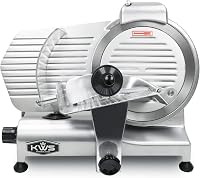
A built-in sharpener can make routine touch-ups simpler, as long as it matches the blade and you follow the slicer's instructions. The KWS KitchenWare Station 10NS has a 10 inch stainless steel blade and a built-in dual whetstones sharpener.
The KWS slicer is a countertop model for meat, cheese, and frozen foods. Its manual should guide sharpening and cleaning for this machine.
A built-in sharpener does not make every sharpening problem a quick fix. If the edge is chipped, badly worn, or still cuts poorly after a proper touch-up, contact the maker or a service shop.
When should you stop sharpening and seek service?
Stop if you see chips, cracks, deep damage, or an edge that remains poor after following the manual. Repeated sharpening can remove more metal without solving a damaged blade.
Also stop if the sharpening stones look broken, the assembly wobbles, or the slicer behaves differently after setup. Don't use the machine until you can confirm that the blade and sharpener are secure.
A replacement blade may be needed if the edge is worn beyond the maker's guidance. See [how many blades come with a meat slicer?
A handy guide](/how-many-blades-come-with-a-meat-slicer/) for context on slicer blade options.
Are handheld sharpeners useful for slicer maintenance?
Handheld sharpeners can be useful for compatible kitchen knives, but they are not a general-purpose slicer blade tool. The AccuSharp Hand-Held Carbide Blade Sharpener & ShearSharp includes a sharpener described for straight and serrated knives, plus a separate scissor sharpener.
Keep this type of tool for knives or scissors it is designed to sharpen. Don't draw it across a slicer blade unless that slicer's maker specifically approves the method.
For bread equipment, use a method made for its blade design. The guide to bread slicer blade sharpening covers that separate task.
How do you care for the blade after sharpening?
Clean and dry the blade before returning the slicer to food prep. Follow the manual for removing the blade or cover, washing parts, and reassembling the machine.
Never leave sharpening dust or food residue on the blade. For replacement guidance, see meat slicer guard options.
Confirm that guards and covers are secure, then make sure the carriage and thickness controls move as intended before loading food.
If you own a Cabela's model, use its model-specific directions. This guide to how to sharpen a Cabela's meat slicer covers that brand's slicers.
What is the safest way to sharpen a meat slicer blade?
For how to sharpen a meat slicer blade, follow the manual for your exact model and use its built-in sharpener when available. Unplug before setup and cleaning, make only the specified passes, deburr as instructed, and stop if the edge or sharpener is damaged.
A handheld kitchen sharpener is for compatible knives, not automatically for a circular slicer blade. Choose the built-in method for routine touch-ups, and seek service when the blade remains dull or shows damage.
Frequently asked questions
How often should you sharpen a meat slicer blade?
Sharpen when the blade begins to drag, crush food, or leave uneven slices, and follow the slicer's manual for timing and technique. Frequent sharpening removes blade material, so don't sharpen on a fixed schedule if the edge still cuts cleanly.
Clean the blade and inspect it before deciding.
Can you sharpen a meat slicer blade with a knife sharpener?
Usually, a handheld knife sharpener is not the right tool for a circular slicer blade. Its contact angle and shape may not suit the blade, and a slip can cause serious injury.
Use the slicer's built-in sharpener or a sharpening method the manufacturer specifically approves.
Do you need to deburr a meat slicer blade after sharpening?
Yes, if the manual calls for deburring after sharpening. The deburring stone removes the small burr left at the edge, which can affect slicing.
Keep your hands away from the blade, use the sharpener as directed, then wash and dry the blade before food prep.
Why is my meat slicer blade still dull after sharpening?
A dull result can come from incorrect stone placement, too much sharpening, a damaged edge, or a blade that needs professional service. Stop if the blade is chipped, badly worn, or still cuts poorly after the manual's sharpening steps.
Check the stones and setup before trying again.