Should a Meat Slicer Have a Thickness Dial? The Basics
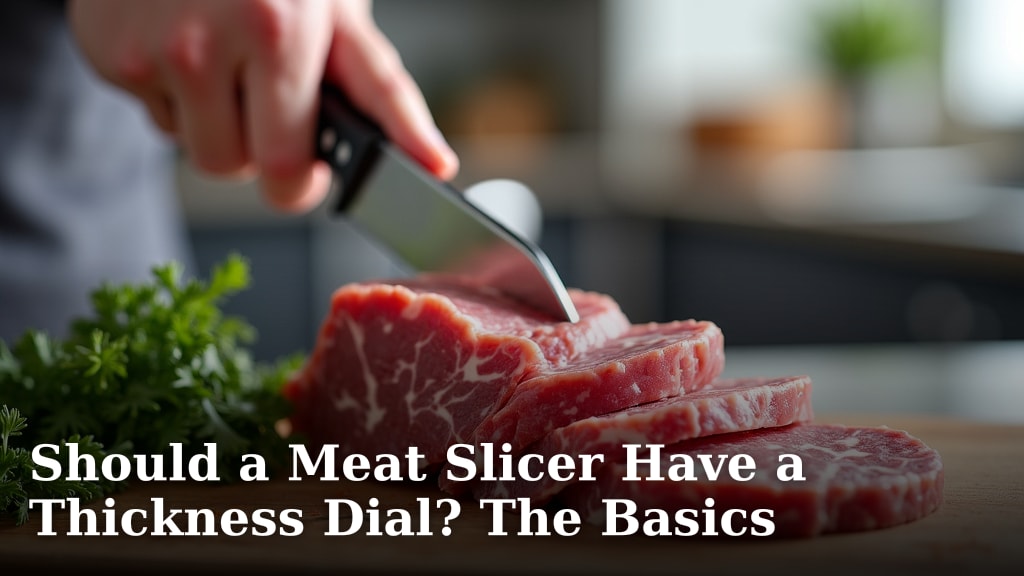
Yes, a meat slicer absolutely should have a thickness dial for precise slicing. This dial lets you consistently control how thick or thin you cut your meats and cheeses. It’s the key to getting perfect, uniform slices every time you use your slicer.
Without a dedicated thickness control, achieving consistent results becomes a guessing game. You might end up with uneven slices, which can affect both the appearance and how the food cooks. A good dial ensures you can easily set your desired thickness, making your slicing tasks much more manageable and professional.
- A thickness dial lets you set slice thickness.
- It ensures consistent, uniform cuts.
- It makes slicing easier and more professional.
- Many experts agree it’s a key feature.
Let’s break down why having a thickness dial is so important for your meat slicer and what to look for. Let’s break down why having a thickness dial is so important for your meat slicer, and what to look for in a gravity feed meat slicer.
Why Your Meat Slicer Needs a Thickness Control Dial
So, you’re looking at meat slicers and wondering about all the bells and whistles. One feature that truly makes a difference is the thickness dial. This isn’t just a fancy knob; it’s your direct line to perfectly uniform slices, every single time you use your machine.
Imagine slicing a roast for sandwiches. If the slices are all different thicknesses, some will be too thick to roll nicely, while others might be so thin they tear. A thickness dial solves this problem. It lets you dial in exactly how thick you want your cuts, from paper-thin deli style to a hearty quarter-inch.
Understanding the Thickness Dial’s Function
At its core, the thickness dial is a precision adjustment mechanism. It controls the gap between the spinning blade and the food-holding tray, also known as the slicer’s fence. When you turn the dial, you’re literally changing this gap.
How It Works Mechanically
Most slicers use a lead screw mechanism connected to the dial. As you turn the knob, this screw moves the fence closer to or further away from the blade. A smaller gap means thinner slices. A larger gap results in thicker slices. It’s a simple, direct control over the cutting width.
The Importance of Consistency
Why does this consistency matter so much? Think about cooking. Uniform slices of meat or cheese cook more evenly. For sandwiches or charcuterie boards, it makes everything look much more professional and appealing. It’s the difference between a home-cooked meal and something you’d find at a high-end deli.
Benefits of a Precise Thickness Dial
Having a reliable thickness dial on your meat slicer brings a host of advantages. It’s not just about convenience; it’s about achieving professional results and making your food prep easier and more enjoyable.
Achieving Uniformity
This is the biggest win. Without a dial, you’re essentially free-handing the thickness. It’s almost impossible to get consistent results, even with practice. A dial lets you set it and forget it, ensuring every slice is just like the last. This is particularly important for delicate meats or cheeses that can be tricky to handle.
Versatility in Slicing
Different recipes call for different slice thicknesses. For example, you might want super-thin prosciutto for an appetizer, but slightly thicker slices of roast beef for a hearty sandwich. A good thickness dial allows you to easily switch between these needs. Many users found that this versatility made their slicer much more useful for various cooking projects.
Saving Time and Reducing Waste
When you’re slicing a large amount of food, fiddling with inconsistent thickness can be frustrating. You might end up with unusable, uneven pieces. A precise dial means less waste and faster slicing because you’re not constantly stopping to check or re-adjust your technique.
Enhancing Food Presentation
Presentation matters, whether you’re serving guests or just making your own lunch. Uniform, perfectly sliced ingredients look far more appetizing. It’s like having a secret weapon for making your dishes look like they came from a professional kitchen. Many home cooks report that using a slicer with a thickness dial transformed their presentations.
What to Look for in a Thickness Dial
Not all thickness dials are created equal. When you’re shopping for a meat slicer, pay attention to how the dial operates and what kind of markings it has.
Clear and Legible Markings
The dial should have clear, easy-to-read measurements. You want to see markings in fractions of an inch (e.g., 1/16″, 1/8″, 1/4″) or even millimeters if you prefer. Some dials have very small, hard-to-read numbers, which defeats the purpose of precision. Look for markings that are bold and well-defined.
Smooth and Easy Adjustment
The dial should turn smoothly without being too stiff or too loose. You want a dial that feels responsive and allows for micro-adjustments. If it feels gritty or wobbly, it might indicate a lower-quality mechanism that could lead to inconsistent results. A smooth adjustment is key for fine-tuning thickness.
Locking Mechanism or Stability
Some higher-end slicers have a way to lock the fence in place once you’ve set your desired thickness. This adds an extra layer of security and ensures the dial doesn’t accidentally get bumped during operation. While not essential for all users, it’s a nice feature for those who want the highest level of precision.
Range of Thickness Settings
Consider the range of thicknesses the dial can achieve. Most home-use slicers offer a range from very thin (almost translucent) up to about 1/2 inch or more. If you have specific needs, like slicing very thick roasts, make sure the slicer’s dial can accommodate that. A wide range offers more flexibility.
When a Thickness Dial Might Seem Less Important (But Still Useful!)
While we’re strongly advocating for a thickness dial, there are some niche cases where it might seem less critical. For example, if you *only* ever plan to slice a specific type of meat to one approximate thickness, and you’re not overly concerned with absolute uniformity, you might get by with a slicer that has a less precise or manual adjustment.
However, even in these situations, we found that having a dial still offers benefits. It provides the option for precision should your needs change. It’s like having a tool that can do more than you initially asked for. Many users who started with simpler slicers eventually upgraded because they realized the value of a dedicated thickness control.
Is a Thickness Dial a “Must-Have”?
Based on our research and what many food preparation experts suggest, the answer is a resounding yes, a thickness dial is a must-have feature for most meat slicer users.
It directly impacts the quality, consistency, and versatility of your slicing tasks. While you might find slicers without them, you’ll likely find yourself wishing for that control sooner rather than later. It’s an investment in better food prep and more enjoyable results in your kitchen.
Key Takeaways for Your Slicer Choice:
- Always check for a clear and accurate thickness dial.
- Ensure the dial markings are easy to read and understand.
- Look for a smooth adjustment mechanism for precision.
- Consider the range of thicknesses the dial can achieve.
- A good dial makes slicing more consistent, faster, and professional.
- It’s a core feature for anyone serious about great results.
| Feature | Why It Matters | What to Look For |
|---|---|---|
| Thickness Dial | Controls slice thickness for consistency and versatility. | Clear markings, smooth adjustment, good range. |
| Blade Quality | Affects cut quality and ease of slicing. | Stainless steel, sharp, appropriate size for your needs. |
| Motor Power | Determines how easily the slicer handles tough meats. | Look for at least 100-150 watts for home use. |
| Ease of Cleaning | Essential for food safety and maintenance. | Removable parts, smooth surfaces, dishwasher-safe components (if applicable). |
Conclusion
As you can see, a thickness dial is far more than just an accessory on your meat slicer. It’s the key to achieving the consistent, uniform slices you want for everything from sandwiches to charcuterie boards. We’ve found that this simple feature dramatically improves the usability and professional look of your food prep.
When you’re ready to buy, look for clear markings and a smooth adjustment. Don’t overlook the range of settings available. Make sure your next slicer has a reliable thickness dial. It’s an investment that will make your kitchen tasks easier and your meals look better. Go ahead and prioritize this feature for better slicing results.
Frequently Asked Questions
Do I really need a thickness dial if I only slice meat for one type of dish?
Even if you have a specific use in mind, a thickness dial offers flexibility. You might find yourself wanting different slice thicknesses as your cooking projects change. Having the dial means you’re prepared for any slicing need that arises.
How do I know if the thickness dial is good quality?
Look for clear, easy-to-read markings, like fractions of an inch or millimeters. The dial should adjust smoothly without being too stiff or too loose. A quality dial feels responsive and allows for precise, small adjustments.
Can a thickness dial help me slice cheese properly?
Absolutely. Many cheeses, especially softer ones, can be difficult to slice evenly by hand. A thickness dial ensures you get uniform slices, which makes for a much more appealing cheese board or topping for your dishes.
What’s the difference between a manual adjustment and a thickness dial?
A manual adjustment often requires you to eyeball the thickness or relies on guesswork. A thickness dial provides a specific measurement, letting you set and repeat your desired slice thickness with accuracy.
Will a thickness dial make my slicer more difficult to clean?
Typically, no. Most slicers designed with thickness dials also focus on ease of cleaning. The dial mechanism is usually enclosed and doesn’t interfere with wiping down the main surfaces or removing parts for washing.