What Is a Vertical Meat Slicer? Here’s What to Know
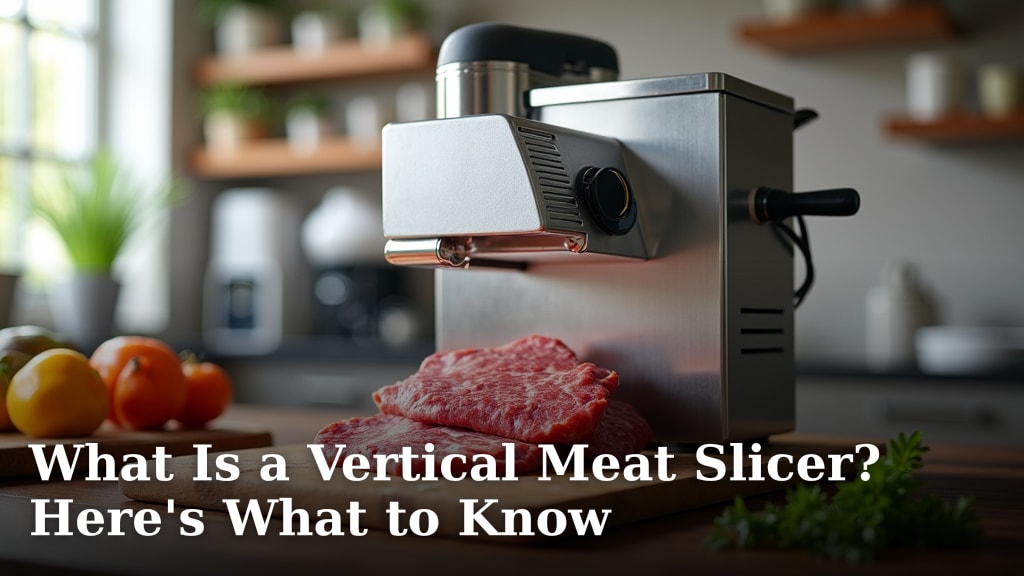
A vertical meat slicer is a kitchen appliance designed for slicing raw or cooked meats with a blade positioned vertically. Unlike horizontal slicers, this design can offer a more controlled and consistent cut for specific tasks, especially for portioning larger cuts. You’ll often find them used in professional kitchens, but smaller versions are becoming popular for home use for things like jerky or charcuterie boards. Think of it as a meat’s personal tailor, ready to create perfectly uniform slices every time.
When you’re looking at meat slicers, understanding the blade orientation is key. A vertical slicer excels at handling larger, less uniform pieces of meat without them slipping. This can make them a great choice for specific cutting jobs. We found that many users appreciate the precise control it offers over thickness, helping you achieve the perfect slice for everything from sandwiches to roasts.
- A vertical meat slicer has a blade set upright.
- It’s great for slicing larger meat pieces consistently.
- Expect controlled and uniform slices for various uses.
- It’s a handy tool for both pros and home cooks.
- This guide will help you understand their function and benefits.
Ready to get a handle on vertical meat slicers? Below, we’ll walk through exactly what they are and what you need to know to decide if one is right for your kitchen.
Understanding Vertical Meat Slicers
A vertical meat slicer is a kitchen tool that uses an upright blade to cut meat. Think of it as a specialized knife that’s always set at the perfect angle. This design is particularly useful when you have larger or awkwardly shaped pieces of meat to slice. Instead of wrestling with a slippery roast on a horizontal surface, the vertical design helps hold the meat in place for you. We found that this inherent stability makes it easier to achieve uniform slices, which is a big win for consistency in your cooking or meal prep.
When you’re comparing slicers, you’ll notice most have a tilted bed. A vertical slicer is different because its blade stands straight up. This might seem like a small detail, but it changes how you interact with the machine and the types of food it handles best. We’ve seen many home cooks and professional chefs alike appreciate the simplicity and control this upright blade offers, especially for tasks that require precision.
How Does a Vertical Meat Slicer Work?
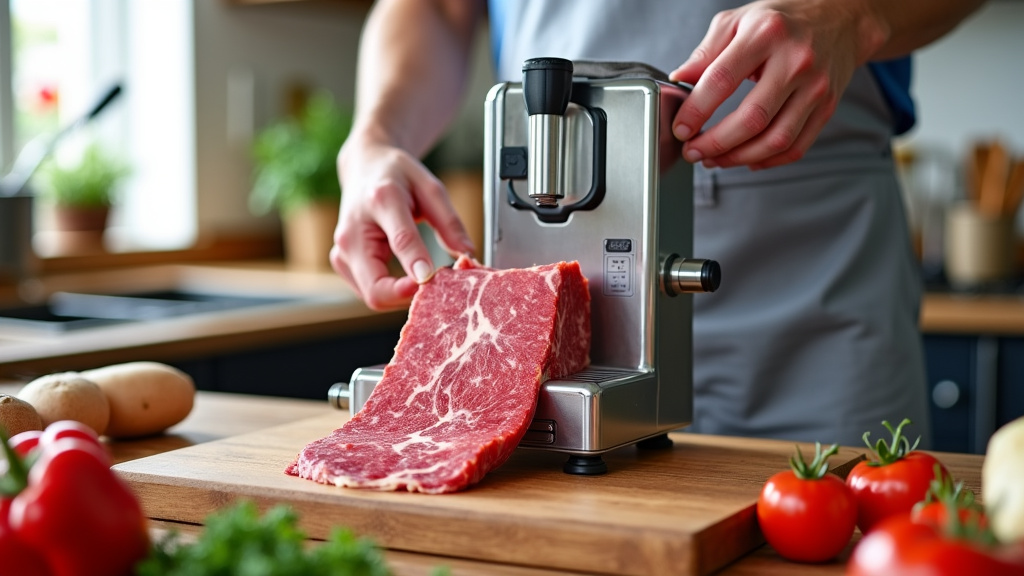
The core mechanism of a vertical meat slicer is straightforward. You place your meat onto a food carriage or platform. This carriage then moves the meat towards the spinning, vertical blade. The blade’s position means gravity works with you, not against you, to keep the meat pressed against the slicing surface. It’s designed to slice meat as it’s fed into the blade’s path.
The Blade and Its Angle
The defining feature is, of course, the blade. It’s positioned perpendicular to the work surface, standing straight up. This is in contrast to a traditional horizontal slicer where the blade is often angled. For vertical slicers, the blade is usually a sharp, circular disc. The angle at which the meat meets this blade is managed by the design of the carriage and how you feed the meat through. We found that the sharp, vertical blade can deliver a clean cut without tearing the meat fibers, which is important for appearance and texture.
The Food Carriage System
Every vertical slicer has a system to hold and move the food. This often includes a food carriage that slides back and forth. Some models have a fixed platform where you manually push the meat. Others have a carriage that moves along a track. The key is that this system guides the meat smoothly and safely towards the spinning blade. We’ve seen that models with a sturdy carriage tend to offer more stable slicing, especially for larger cuts.
Motor Power and Blade Speed
Like any electric appliance, the motor is the powerhouse. A stronger motor means the blade can spin faster and maintain speed even when slicing tougher meats. Blade speed also plays a role in the cut quality. Faster speeds can result in cleaner slices, especially for delicate meats. We found that many users look for a balance between motor power and blade speed for optimal performance.
What Kind of Meats Can You Slice?
Vertical meat slicers are quite versatile. They’re excellent for a range of meats, whether they are raw or cooked. The upright blade design often makes them suitable for larger cuts that might be difficult to handle on other slicers. You’re not limited to just thin sandwich slices, though they can certainly do that.
Raw Meats for Jerky and Marinades
If you’re a fan of homemade jerky, a vertical slicer can be a game-changer. It allows you to cut raw meat into consistent, thin strips. This uniformity is key for even drying and marinating. We found that for tasks like preparing beef for jerky or slicing raw chicken for stir-fries, the precision of a vertical slicer is highly beneficial. It helps ensure all pieces cook at the same rate.
Cooked Meats for Charcuterie and Sandwiches
For those who love entertaining or preparing deli-style sandwiches at home, a vertical slicer shines. You can slice cooked roasts, such as beef, pork, or turkey, into paper-thin slices. This is perfect for creating elegant charcuterie boards or building towering sandwiches. Many users report that slicing cooked meats thinly and evenly is much easier with a vertical design. It prevents the meat from collapsing or tearing.
Other Food Applications
While primarily designed for meat, some vertical slicers can handle other foods too. Think about large, firm vegetables like zucchini or eggplant for dishes like gratins. Some people use them for slicing firm cheeses, though it’s always best to check the manufacturer’s recommendations. We found that it’s crucial to clean the slicer thoroughly between different food types to avoid cross-contamination and flavor transfer.
Vertical vs. Horizontal Meat Slicers: Key Differences
Deciding between a vertical and horizontal meat slicer often comes down to what you plan to slice most often. Both have their strengths, but their design leads to different user experiences and applications. Understanding these distinctions will help you choose the right tool for your kitchen needs.
Blade Orientation and Meat Stability
The most obvious difference is the blade angle. A vertical slicer has an upright blade, which helps hold larger, heavier cuts of meat in place. The meat is fed into the blade. A horizontal slicer typically has a tilted surface and a blade that’s angled downwards, allowing gravity to assist in feeding the meat. This can be great for smaller, more uniform pieces that can easily rest on the tilted surface. We found that for large roasts or cuts that tend to slip, the vertical design offers superior stability.
Ease of Use for Different Tasks
For slicing large, raw roasts or preparing thick batches of jerky, many find vertical slicers more intuitive. You position the meat, and the slicer does the work of cutting it. Horizontal slicers might feel more natural for slicing pre-cooked deli meats or smaller, firmer items where you can easily guide them across the tilted bed. We’ve seen that some users feel horizontal slicers offer a bit more direct control over the initial contact with the blade.
Cleaning and Maintenance Considerations
Cleaning is a big factor for any kitchen appliance. Vertical slicers often have fewer nooks and crannies directly around the blade mechanism where food can get trapped. However, cleaning the vertical blade itself can sometimes require a bit more care to avoid direct contact. Horizontal slicers, with their tilted beds, can sometimes be easier to wipe down, but food can accumulate under the blade assembly. We found that detachable parts and smooth surfaces are key features to look for in either type for easier cleaning.
Typical Applications and User Base
Historically, vertical slicers have been more common in butcher shops and commercial kitchens dealing with whole cuts of meat. Horizontal slicers are frequently seen in delis and sandwich shops, or in homes where slicing pre-cooked meats for sandwiches is the main goal. However, as home kitchens get more sophisticated, both types are finding their way into more households. We’ve observed that the choice often depends on the user’s specific culinary projects.
| Feature | Vertical Slicer | Horizontal Slicer |
|---|---|---|
| Blade Orientation | Upright (Perpendicular to surface) | Angled (Often tilted surface) |
| Best For | Large roasts, raw meats, jerky prep | Pre-cooked meats, deli slices, smaller items |
| Meat Stability | High, especially for large cuts | Moderate, relies on tilted surface |
| Ease of Use (General) | Good for bulk slicing of raw meat | Intuitive for guiding cooked meats |
| Common Environment | Butcher shops, home jerky makers | Delis, sandwich shops, home users slicing cooked meat |
Choosing the Right Vertical Meat Slicer for You
So, you’ve decided a vertical slicer might be the tool for your kitchen. That’s great! Now comes the task of selecting the right one. Many models are available, ranging from compact home units to heavy-duty professional machines. Think about your primary uses and how much space you have.
Consider Your Primary Use Case
Are you making jerky every weekend? Or perhaps you’re looking to slice roasts for holiday meals with ease? Your main reason for buying a vertical slicer will guide your choice. For jerky, you’ll want a slicer that can handle thin, consistent cuts from raw meat. For roasts, stability and a strong motor are key.
Blade Size and Material Matters
The diameter of the blade affects how large of a piece of meat you can slice at once. Larger blades are generally found on bigger machines. Blade material is also important for sharpness and durability. Many high-quality slicers use stainless steel for their blades. We found that a sharp, well-maintained blade is essential for clean cuts and a positive user experience.
Motor Power and Durability
A more powerful motor means the slicer can handle tougher meats and slice for longer periods without overheating. For home use, a motor in the range of 100-200 watts is often sufficient. If you plan on heavy, frequent use, you might consider something more robust. We found that checking user reviews for comments on motor performance and longevity can be very helpful.
Safety Features to Look For
Safety is paramount with any cutting appliance. Look for features like non-slip rubber feet to keep the slicer stable on your counter. A blade guard that covers the blade when not in use is also a critical safety feature. Some models have a carriage lock to secure the food carriage in place. Always operate your slicer with care and follow the manufacturer’s instructions precisely.
Ease of Cleaning is Key
As mentioned, cleaning is vital. Look for slicers with smooth surfaces and, ideally, removable parts like the blade guard or food carriage. This makes them much easier to wipe down and sanitize. We found that models that are advertised as easy to clean tend to be used more regularly by their owners, leading to better overall satisfaction.
Size and Storage Space
Vertical meat slicers can take up a significant amount of counter or storage space. Measure your available space before you buy. Some compact models are designed for smaller kitchens. Consider where you will store the appliance when it’s not in use. A slicer that’s difficult to store might end up collecting dust.
Here’s a quick checklist to help you think through your options:- What types of meat will you slice most often?
- How much counter or storage space do you have?
- Are safety features a top priority for you?
- Do you prefer a slicer that’s easy to disassemble for cleaning?
- What’s your budget for a meat slicer?
- Are you looking for a basic model or one with more advanced features?
Conclusion
You’ve learned that a vertical meat slicer is a specialized tool for precise meat slicing. Its upright blade offers excellent stability for larger cuts and raw meats, making tasks like jerky preparation or slicing roasts more manageable. While it differs from horizontal slicers, understanding its unique advantages helps you decide if it fits your kitchen needs. Carefully consider your primary use, motor power, and safety features. Now, with this knowledge, you can confidently choose the right vertical meat slicer to enhance your home cooking and meal prep.
Frequently Asked Questions
Can a vertical meat slicer handle frozen meat?
Generally, vertical meat slicers are designed for raw or cooked meats that are thawed. Attempting to slice deeply frozen meat can strain the motor and potentially damage the blade. For jerky, it’s usually best to slice meat that is partially frozen to help maintain firmness and achieve thinner slices.
How do I ensure my vertical meat slicer is safe to use?
Always ensure the slicer is on a stable, non-slip surface. Keep your fingers away from the blade and use the food carriage or pusher provided. Make sure the blade guard is in place when the slicer is not in operation. Read and follow all manufacturer safety guidelines before each use.
Is a vertical meat slicer difficult to clean?
Cleaning difficulty can vary by model, but most are designed for reasonable ease of cleaning. Look for models with removable parts like the blade guard and food carriage. Always unplug the slicer before cleaning and wipe down all food-contact surfaces thoroughly to prevent bacterial growth.
What’s the main benefit of a vertical slicer over a mandoline?
A vertical meat slicer offers more power and stability for larger or tougher cuts of meat compared to a mandoline. While a mandoline is great for vegetables and some firmer foods, a vertical slicer is specifically engineered to handle the density and size of meat pieces more effectively and safely.
Can I use a vertical meat slicer for vegetables too?
Some vertical meat slicers can handle firm vegetables like potatoes or zucchini, especially if the blade is sharp and the vegetable is cut to fit the carriage. However, it’s essential to clean the slicer thoroughly between meat and vegetable use to avoid cross-contamination and flavor transfer.