9 Best Electric Meat Slicers for Home Use (October 2026)
The best electric meat slicers for home use include the VEVOR Commercial Meat Slicer for larger slicing jobs, the Borlebbi Meat Slicer for two-blade versatility, and the CUSIMAX Meat Slicer for a wide thickness range.
On this page (16 sections)
- How we chose electric meat slicers for home use
- How do the best electric meat slicers compare?
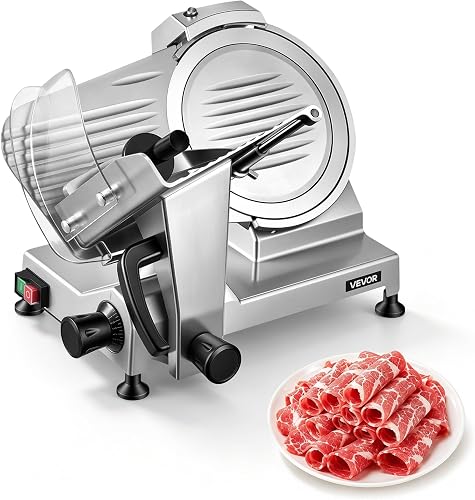
- 1. VEVOR Commercial Meat Slicer: Best for larger slicing jobs
- 2. Borlebbi Meat Slicer: Best for two-blade versatility
- 3. CUSIMAX Meat Slicer: Best for a wide thickness range
- 4. Borlebbi Meat Slicer Machine for Home: Best for a quieter-sounding motor
- 5. VEVOR Meat Slicer: Best for compact dual-blade slicing
- 6. BESWOOD 10" Electric Deli Meat Slicer: Best for a heavy-duty counter setup
- 7. CUSIMAX Electric Meat Slicer: Best for deli and charcuterie prep
- 8. OSTBA Electric Meat Slicer with Two 6.7”: Best for a small counter
- 9. FOHERE 250W Electric Meat Slicer Machine: Best for three included blades
- How do you choose an electric meat slicer for home use?
- Which slicer features matter most for everyday prep?
- Is a larger electric meat slicer better for home use?
- What should you check before buying a home meat slicer?
- Which electric meat slicer should you choose?
The best electric meat slicer for home use depends on your counter space and the foods you slice most. The VEVOR Commercial Meat Slicer has a 10-inch blade for larger jobs, while Borlebbi and CUSIMAX offer lighter options with two removable blades for everyday deli prep.
A powered slicer can help you prepare consistent portions of meat, cheese and bread, but blade size, cleanup and storage matter as much as motor power. This roundup compares nine options by their stated features, dimensions and fit for common home tasks.
If you’re still deciding whether a machine belongs in your kitchen, read whether a meat slicer is good for home use. For a step-by-step way to compare blade size, thickness settings and cleaning needs, see how to choose an electric meat slicer.
Our picks at a glance
-
1
-
2

-
3

- 4
 Check it
Borlebbi Meat Slicer Machine for Home
Best for a quieter-sounding motor - 5
 Best for compact dual-blade slicingCheck it
- 6
 Check it
BESWOOD 10" Electric Deli Meat Slicer
Best for a heavy-duty counter setup - 7
 Best for deli and charcuterie prepCheck it
- 8
 Check it
OSTBA Electric Meat Slicer with Two 6.7”
Best for a small counter - 9
 Check it
FOHERE 250W Electric Meat Slicer Machine
Best for three included blades
How we chose electric meat slicers for home use
We compared blade size, adjustable thickness, removable parts, stated dimensions and features that affect routine home use. Our score weighs specs and features against the needs of someone preparing meat and other foods at home.
We also considered whether the stated design seems easier to store, clean or leave set up on a counter.
How do the best electric meat slicers compare?
Blade size and storage needs are the clearest ways to separate these picks. The VEVOR Commercial and BESWOOD have 10-inch blades, while several lighter options use 7.5-inch blades and OSTBA uses a 6.7-inch blade.
| Product | Best for | Blade | Thickness | Weight | Our score |
|---|---|---|---|---|---|
| VEVOR Commercial Meat Slicer | larger slicing jobs | 10 in carbon steel | 0–12 mm | 34 lb | 9.7 |
| Borlebbi Meat Slicer | two-blade versatility | Two 7.5 in stainless steel blades | 0–15 mm | 10.7 lb | 9.6 |
| CUSIMAX Meat Slicer | a wide thickness range | 8.7 in | 1–20 mm | 9.5 | |
| Borlebbi Meat Slicer Machine for Home | a quieter-sounding motor | Two 7.5 in stainless steel blades | 0–15 mm | 9.4 | |
| VEVOR Meat Slicer | compact dual-blade slicing | Two 7.5 in stainless steel blades | 0–15 mm | 8.4 lb | 9.3 |
| BESWOOD 10" Electric Deli Meat Slicer | a heavy-duty counter setup | 10 in chromium-plated steel | 33 lb | 9.2 | |
| CUSIMAX Electric Meat Slicer | deli and charcuterie prep | Two 7.5 in stainless steel blades | Up to 15 mm | 9.3 lb | 9.1 |
| OSTBA Electric Meat Slicer with Two 6.7” | a small counter | Two 6.7 in stainless steel blades | 0–15 mm | 9.0 | |
| FOHERE 250W Electric Meat Slicer Machine | three included blades | Three 7.5 in stainless steel blades | 0–15 mm | 8.4 |
1. VEVOR Commercial Meat Slicer: Best for larger slicing jobs
VEVOR Commercial Meat Slicer: Best for larger slicing jobs
- 10-inch carbon steel blade
- Thickness range from 0 to 12 mm
- 240W load power
- Removable food holder and pusher
A 10-inch blade and 0–12 mm adjustment give you room to slice larger portions and choose deli-thin or thicker cuts. Its 34 lb weight calls for a dedicated counter spot.
Pros
- Largest blade in this group
- Built-in sharpening stone
- Food holder and pusher remove for cleaning
Cons
- Heaviest pick here
- Hand wash only
The VEVOR Commercial Meat Slicer is the strongest fit if you regularly slice larger pieces and can leave a heavy machine on the counter. Its 10-inch carbon steel blade and 0–12 mm thickness range give you options from thin deli portions to thicker cuts.
VEVOR lists 240W load power and a built-in sharpening stone. The food holder, pusher and blade are removable, and the stainless steel tray can be wiped clean after use.
At 34 lb, this is not the easiest pick to move between uses. Measure your available counter space and storage route before choosing it, and follow its hand-wash care instructions.
Choose this model for a dedicated setup and larger slicing tasks. If you need a lighter electric deli food slicer for home, compare the smaller VEVOR or Borlebbi options below.
2. Borlebbi Meat Slicer: Best for two-blade versatility
Borlebbi Meat Slicer: Best for two-blade versatility
- Two removable 7.5-inch stainless steel blades
- Thickness range from 0 to 15 mm
- 200W motor
- Compact design
Two removable blades and a 0–15 mm range make it a flexible option for meat, cheese, bread and produce. Its compact design suits buyers who need a slicer that can be put away.
Pros
- Two blades included
- Removable carriage and pusher
- Compact enough for most cabinets and counters
Cons
- Hand wash only
- No exact storage dimensions given
Borlebbi makes sense when you want two blade types and a compact design for everyday kitchen use. Its two removable 7.5-inch stainless steel blades and thickness adjustment from 0 to 15 mm support different foods and slice styles.
The food carriage, slide-rod extension and pusher also come off for cleaning. Borlebbi describes the die-cast aluminum body as compact enough for most cabinets and counters, though checking your actual storage dimensions is still useful.
At 10.7 lb, it’s much easier to move than the 10-inch commercial-style machines in this roundup. The tradeoff is hand washing, so consider how much cleanup you’re willing to do after each session.
For a broader comparison of a deli meat slicer for home use, including picks suited to cheese as well, see the best meat and cheese slicers for home use.
3. CUSIMAX Meat Slicer: Best for a wide thickness range
CUSIMAX Meat Slicer: Best for a wide thickness range
- 8.7-inch blade
- Thickness range from 1 to 20 mm
- 200W motor
- Removable food carriage
The 1–20 mm adjustment range covers thin deli cuts and slices up to about 3/4 inch thick. Its removable carriage, pusher and blades support more thorough cleanup.
Pros
- Broad thickness range
- Two removable stainless steel blades
- Removable food carriage
Cons
- Instructions say not to slice frozen food or meat with bones
- Do not run continuously for more than 7 minutes
This CUSIMAX stands out for its stated 1–20 mm thickness range, which reaches thicker cuts than most other picks here. It has an 8.7-inch blade and a 200W motor.
The blade, food pusher and carriage remove for cleaning. CUSIMAX includes two stainless steel blades, and the instructions say not to slice frozen foods, meat with bones, or food in wrappers such as foil or plastic film.
There’s also an operating limit to keep in mind: don’t run it continuously for more than 7 minutes. That makes it a better match for typical home batches than long, uninterrupted slicing sessions.
Pick it if thickness range is a priority and you’re comfortable following those use limits. Check the manual for cleaning and blade care, since the supplied care information identifies the unit as dishwasher safe but doesn’t specify which parts are safe to wash that way.
4. Borlebbi Meat Slicer Machine for Home: Best for a quieter-sounding motor
Borlebbi Meat Slicer Machine for Home: Best for a quieter-sounding motor
- 200W DC motor
- Two removable 7.5-inch blades
- Thickness range from 0 to 15 mm
- Child safety lock
Borlebbi describes the 200W DC motor as lower noise, and the compact dimensions can make counter and cabinet planning easier. A child safety lock and removable tray add practical details for home use.
Pros
- Child safety lock
- Two blade types included
- Carriage and food tray remove for cleaning
Cons
- Hand wash only
- No motor noise level specified
Borlebbi describes this model’s 200W DC motor as lower noise, which may appeal if kitchen noise is a concern. It also includes two 7.5-inch stainless steel blades, a stainless steel tray and thickness adjustment from 0 to 15 mm.
A child safety lock and non-slip feet support stable operation, and the blade cover helps shield your hands during slicing. The carriage and several food-contact parts detach for cleaning.
Its dimensions are 14.6 x 9.4 x 10.2 inches, giving you a concrete starting point for checking cabinet or counter fit. Borlebbi does not give a noise level, so treat “lower noise” as the brand’s description rather than a measurable comparison.
This option suits a home kitchen where adjustable cuts and easier storage matter. Its parts call for hand washing.
5. VEVOR Meat Slicer: Best for compact dual-blade slicing
VEVOR Meat Slicer: Best for compact dual-blade slicing
- Two 7.5-inch stainless steel blades
- Thickness range from 0 to 15 mm
- 200W motor
- Reversible tray
This VEVOR combines two blade types with a 0–15 mm range in an 8.4 lb unit. Removable parts and a reversible tray help with cleanup after slicing.
Pros
- Serrated and non-serrated blades included
- Removable blade, pusher and slide bar extender
- Lightest dual-blade pick here
Cons
- Hand wash only
- Semi-automatic operation requires you to move the food tray
The smaller VEVOR pairs two 7.5-inch blades with a 0–15 mm range and weighs 8.4 lb. That combination is easier to lift and store than the 10-inch VEVOR, while still covering common home slicing tasks.
The serrated and non-serrated blades are both included. Its blade, pusher and slide bar extender remove for cleaning, and the reversible tray can be wiped down.
VEVOR describes this as a home slicer for foods including frozen meat, deli items, steak, ham, baguettes, carrots and potatoes. For models suited to that job, compare frozen meat slicers for home use.
Follow the manual for safe handling and cleaning, since this unit is designed for hand washing.
Choose it when you want a lighter machine with two blade types. For an even smaller footprint, consider the OSTBA below or see compact meat slicers for home use.
6. BESWOOD 10" Electric Deli Meat Slicer: Best for a heavy-duty counter setup
BESWOOD 10" Electric Deli Meat Slicer: Best for a heavy-duty counter setup
- 10-inch chromium-plated steel blade
- 240W power
- Removable serving plate
- Built-in blade sharpener
The 10-inch blade and 33 lb weight suit a permanent counter setup more than a slicer you plan to move after every use. Its removable serving plate helps with cleanup.
Pros
- 10-inch blade
- Built-in two-stone sharpener
- Removable serving plate
Cons
- Heavy for frequent storage
- No thickness adjustment range provided
The BESWOOD is built around a 10-inch chromium-plated steel blade and weighs 33 lb. Read our BESWOOD slicer review for more model details.
Its size and weight make it a better fit for a counter spot you can leave set up than for frequent cabinet storage.
The removable serving plate supports cleaning, and BESWOOD includes a top-mounted two-stone blade sharpener. For a side-by-side comparison, see BESWOOD versus KWS slicers.
The aluminum body and 240W power are also stated features.
No thickness adjustment range is provided for this model, so it’s harder to match to a specific slice thickness before you choose it. BESWOOD calls out slicing meat, cheese, vegetables, ham and fruit, and its care instructions say hand wash only.
Pick it if you want a larger blade and expect a stable place for the machine. If you need detailed thickness control or a lighter slicer, compare the models with published ranges.
7. CUSIMAX Electric Meat Slicer: Best for deli and charcuterie prep
CUSIMAX Electric Meat Slicer: Best for deli and charcuterie prep
- Two removable 7.5-inch stainless steel blades
- Thickness range up to 15 mm
- 200W motor
- Hidden track design
The serrated and non-serrated blades cover a mix of deli meats, hard cheeses and bread. CUSIMAX also gives sliced fruit for dehydrating as a suggested use.
Pros
- Two blade types included
- Thickness adjusts up to 15 mm
- Hidden track and removable blade aid cleanup
Cons
- A collection tray is not included
- No exact thickness minimum given
This CUSIMAX is a good match for home deli boards because it comes with serrated and non-serrated 7.5-inch blades and adjusts up to 15 mm. For bread-focused slicing, compare electric bread slicers for home use.
The brand names deli meats, hard cheeses, fruit, vegetables and bread among its suggested foods.
A hidden track design and removable blade help with cleaning, while four silicone suction pads are intended to hold the machine in place. It weighs 9.3 lb, so it’s manageable to move when you need the counter back.
The description says a collection tray is not provided. Set one behind the blade before use, and follow the manual for operating and cleaning instructions.
Consider this model for mixed deli and charcuterie prep. If you want a wider blade or a larger thickness range, compare the 8.7-inch CUSIMAX above.
8. OSTBA Electric Meat Slicer with Two 6.7”: Best for a small counter
OSTBA Electric Meat Slicer with Two 6.7”: Best for a small counter
- Two 6.7-inch stainless steel blades
- Thickness range from 0 to 15 mm
- 150W power
- Dishwasher-safe removable parts
The 11.7 x 7.78 x 10.2 in footprint is the smallest stated here, making this a practical pick when counter space is limited. Removable dishwasher-safe parts can simplify routine cleanup.
Pros
- Smallest stated footprint in this group
- Serrated and non-serrated blades included
- Removable components are dishwasher safe
Cons
- Lowest power in this group at 150W
- Smaller blade may limit the size of food you can slice
OSTBA has the smallest stated footprint here at 11.7 x 7.78 x 10.2 inches. Its 6.7-inch serrated and non-serrated blades, 0–15 mm adjustment and 150W power suit smaller kitchen jobs where counter space is tight.
The blade and food carriage are removable and dishwasher safe, according to OSTBA’s care information. Non-slip suction feet and a food pusher that doubles as a blade guard are also included.
The smaller blade can limit the size of food you can comfortably slice, so compare it with your typical meat and cheese portions. The compact dimensions are useful for storage planning, but still measure your cabinet opening and counter space.
Choose this model when a modest footprint matters more than a larger blade or higher power. It also makes sense if dishwasher-safe removable components are a priority.
9. FOHERE 250W Electric Meat Slicer Machine: Best for three included blades
FOHERE 250W Electric Meat Slicer Machine: Best for three included blades
- 250W motor
- Three 7.5-inch stainless steel blades
- Thickness range from 0 to 15 mm
- Die-cast aluminum body
Three included blades give you extra blade options for different foods, while the 250W motor is the highest stated power in this group. Its dimensions are worth checking against your counter or cabinet before buying.
Pros
- Three blades included
- 250W motor
- Thickness adjusts from 0 to 15 mm
Cons
- No exact blade-change instructions given
- No weight listed
FOHERE includes three 7.5-inch stainless steel blades, giving you more blade options than the other picks here. Its 250W motor and thickness dial from 0 to 15 mm suit buyers who want several blade choices for meat, cheese, bread and vegetables.
The die-cast aluminum body measures 16.33 x 10.63 x 9.84 inches. Non-slip suction feet, a food pusher and an inner on/off switch are part of the stated design.
FOHERE says the blades run slower for cutting results and machine protection, but does not provide a specific speed. The listed care information calls the slicer dishwasher safe, but check the manual to see which components can go in the dishwasher.
Pick it if three blades and a higher stated power rating appeal to you. Its lower score reflects fewer details about weight and blade-change steps than several other options.
How do you choose an electric meat slicer for home use?
Choose a home slicer by matching its blade, thickness range and footprint to what you slice and where you’ll store it. A larger blade can suit broad roasts, while a smaller machine may be easier to keep in a cabinet.
Start with the food you slice most often. If you mainly prepare small deli portions, a 6.7- or 7.5-inch blade may be enough; larger roasts can call for more blade and carriage space.
Then compare thickness adjustment. Several models here offer ranges up to 15 mm, while the CUSIMAX 8.7-inch model reaches 20 mm and the VEVOR Commercial offers up to 12 mm.
Which slicer features matter most for everyday prep?
Removable food-contact parts, a stable base and a usable thickness dial make routine slicing and cleanup easier. Dual-blade models give you a choice between serrated and non-serrated edges for different foods.
Look at how each machine handles cleaning before you buy. Some identify removable blades and carriages, while only certain models state that removable components are dishwasher safe.
Safety features also matter around a moving blade. Use the food pusher, keep the slicer on a stable surface, and follow the manual’s instructions for operating, cleaning and changing blades.
Is a larger electric meat slicer better for home use?
A larger slicer can make sense if you slice large pieces often and have a permanent counter spot. The 10-inch VEVOR and BESWOOD offer larger blades, but both weigh more than 30 lb.
For occasional deli prep, a lighter 7.5-inch model may be easier to move and store. Measure your cabinet opening, counter depth and the path you’ll use to put the slicer away.
What should you check before buying a home meat slicer?
Check dimensions, included blades, thickness adjustment, cleaning instructions and the size of your usual food portions. Confirm that you have space for the slicer and a safe place to collect slices as they come off the blade.
Avoid assuming that every model can handle frozen meat, bones or continuous operation. Follow the exact manual for the machine you choose, including any limits on food types or run time.
Which electric meat slicer should you choose?
Choose the VEVOR Commercial Meat Slicer if you want a 10-inch blade and can leave a heavier machine set up. Choose Borlebbi for two removable blades in a compact design, or OSTBA if your counter is short on space.
For a broader look at a best home meat and cheese slicer, compare the models that suit your usual foods and cleanup routine. If you’re weighing whether a slicer fits your kitchen at all, start with the case for a meat slicer at home.
Our top 3 picks at a glance
-
1
-
2
-
3
Frequently asked questions
What makes an electric meat slicer suitable for home use?
A home slicer should fit your counter and storage space, offer a thickness range that matches your usual cuts, and have parts you can clean safely. Check the blade size and overall dimensions against the largest food you plan to slice.
A heavier 10-inch model may work best in a dedicated spot, while a lighter unit can be easier to store.
What blade size should I choose for a home meat slicer?
A 6.7- or 7.5-inch blade can suit regular deli slices and smaller food portions, while a 10-inch blade offers more room for larger pieces. The food carriage and pusher also limit the size of what you can slice.
Measure your typical roast or cheese block, then compare it with the slicer's usable space.
Is a serrated or non-serrated blade better?
A serrated blade can help grip foods with firmer surfaces, while a non-serrated blade is often chosen for smooth deli-style cuts. Several picks here include both, so you can choose a blade for the food rather than relying on one style for every job.
Follow the instructions when changing blades.
Can a home meat slicer cut frozen meat?
Some models describe frozen meat as a suitable use, but others explicitly warn against slicing frozen food. Check the instructions for your exact slicer and prepare meat as directed.
Never assume every electric slicer can handle frozen food, bones or wrapped items.
How do you clean an electric meat slicer?
Unplug the slicer, follow its manual, and remove only the parts the maker identifies as removable. Clean the blade and food-contact surfaces carefully, then dry and reassemble them as directed.
Some models have dishwasher-safe parts, while others call for hand washing.