7 Best Meat Slicer Cleaners (October 2026)
The best meat slicer cleaners include the CleanSmart Daily Surface Cleaner and Pet-Safe Disinfectant for a compact spray pack, the CleanSmart Daily Surface Cleaner and Pet-Safe Disinfectant for larger spray bottles, and the Jani-Source Bussit Clean Foodservice Surface Sanitizer for foodservice cleaning.
On this page (7 sections)
The best meat slicer cleaner is one labeled for food contact surfaces and suitable for the slicer's materials. Clean off food and grease first, then apply a compatible sanitizer exactly as directed, including its wet contact time and any rinse step.
A slicer has surfaces that touch food, as well as parts that may need different care. Check the manual before applying any cleaner to the blade, housing, or electrical components.
A spray described for counters or food contact surfaces is not automatically approved for every slicer part.
For a step-by-step routine, see how to clean a meat slicer. If you use a hand-cranked model, follow the separate guidance on meat slicer manual cleaning.
Our picks at a glance
-
1
 Best for a compact spray pack
CleanSmart Daily Surface Cleaner and Pet-Safe Disinfectant
9.7/10 our score
See it on Amazon -
2
 Best for larger spray bottles
CleanSmart Daily Surface Cleaner and Pet-Safe Disinfectant
9.5/10 our score
See it on Amazon -
3
 Best for foodservice cleaning
Jani-Source Bussit Clean Foodservice Surface Sanitizer
8.8/10 our score
See it on Amazon
- 4
 Check it
Jani-Source Bussit Clean Food Surface Sanitizer
Best for a multi-quart supply - 5
 Check it
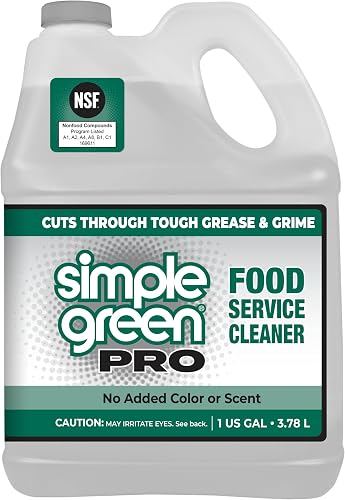
Simple Green Pro Food Service Cleaner
Best for grease and food residue - 6
 Check it
LEXX® Food Contact Surface Sanitizer & Cleaner
Best for ready-to-use spray - 7
 Check it
LEXX® Food Contact Surface Sanitizer & Cleaner
Best for a ready-to-use gallon
How we chose meat slicer cleaners
The best meat slicer cleaner options here have product information that describes food service, food contact surfaces, or use around eating surfaces. We compared those stated uses, formats, and instructions to help you narrow the choices.
Our score weighs specs and features against what you're shopping for. A cleaner's label still determines whether it suits your slicer and how to use it.
A cleaner removes soil, while a sanitizer is used to reduce germs on a surface according to its directions. Some options here combine those roles; a greasy slicer may need a separate cleaning step before sanitizing.
Check the slicer manual and the cleaner's directions for material compatibility, surface preparation, contact time, wiping, and rinsing. Use only the products and methods permitted for your specific model.
| Product | Best for | Our score |
|---|---|---|
| CleanSmart Daily Surface Cleaner and Pet-Safe Disinfectant | a compact spray pack | 9.7 |
| CleanSmart Daily Surface Cleaner and Pet-Safe Disinfectant | larger spray bottles | 9.5 |
| Jani-Source Bussit Clean Foodservice Surface Sanitizer | foodservice cleaning | 8.8 |
| Jani-Source Bussit Clean Food Surface Sanitizer | a multi-quart supply | 8.6 |
| Simple Green Pro Food Service Cleaner | grease and food residue | 8.4 |
| LEXX® Food Contact Surface Sanitizer & Cleaner | ready-to-use spray | 8.2 |
| LEXX® Food Contact Surface Sanitizer & Cleaner | a ready-to-use gallon | 7.9 |
The best meat slicer cleaner picks
These options range from small spray packs to foodservice formats and a gallon cleaner. Read each product's directions for your intended surface before use.
CleanSmart Daily Surface Cleaner and Pet-Safe Disinfectant: Best for a compact spray pack
- 16 oz, 3 pack
- Hypochlorous formula
- For eating surfaces
- No rinsing stated
A compact three-pack of daily surface cleaner and disinfectant. CleanSmart says it is safe to spray on eating surfaces and breaks down to saline solution after use.
CleanSmart's 16 oz three-pack is our top pick for people who want a compact spray format. CleanSmart says the formula is safe to spray on eating surfaces, contains hypochlorous acid, and breaks down to saline solution after use.
The provided uses include countertops, highchairs, floors, and appliances. That makes it a possible option for compatible food contact surfaces around a slicer, but it does not confirm suitability for every blade coating or slicer material.
CleanSmart describes the formula as free of alcohol, ammonia, bleach, fragrance, and dyes. It also says no rinsing is needed for eating surfaces.
Check the bottle directions and your slicer's manual before applying it to equipment.
Choose this option if a smaller bottle and multipack suit your routine. Keep it off any part the manual says not to spray.
CleanSmart Daily Surface Cleaner and Pet-Safe Disinfectant: Best for larger spray bottles
- 23 oz, 2 pack
- Hypochlorous formula
- For countertops and pet bowls
- No harsh residue stated
This two-pack comes in larger bottles than the 16 oz option. CleanSmart says it is safe to spray around food and breaks down to saline solution after it kills viruses and bacteria.
This CleanSmart option comes in two 23 oz bottles, giving you more spray per bottle than the 16 oz pack above. CleanSmart says it is intended for daily surface disinfection and names countertops, pet bowls, highchairs, floors, and toys among its uses.
The brand says the formula is safe to spray around food and breaks down to saline solution after it kills viruses and bacteria. It also describes the product as free of alcohol, ammonia, bleach, fragrance, and dyes.
Those statements do not replace the slicer's care instructions. Confirm that the cleaner is suitable for the specific surface, and follow the package directions for use.
Pick it if you prefer larger spray bottles for routine surface cleaning. For a VEVOR model, read how to clean a VEVOR meat slicer before choosing a cleaning method.
Jani-Source Bussit Clean Foodservice Surface Sanitizer: Best for foodservice cleaning
- 1 quart
- Spray and wipe
- Kills 99.9% of kitchen bacteria
- No rinse required
A one-quart foodservice cleaner and sanitizer for daily use. Its directions describe spray-and-wipe use and say rinsing is not required.
Jani-Source Bussit Clean comes in a one-quart container and is described for foodservice surface cleaning and sanitizing. Its directions call for spray-and-wipe use, and the product information says rinsing is not required.
Jani-Source says it kills 99.9% of kitchen bacteria and is suitable for schools, restaurants, food handling, and processing areas. Those stated uses make it relevant to food preparation spaces, though they do not specify every slicer material.
Use it only after removing visible food and soil, and check its label for surface preparation and contact directions. If your manual requires rinsing or lists material limits, follow the slicer's instructions.
This is a practical size to consider if you want a quart for regular cleaning. Avoid assuming that “no rinse” applies to every part or overrides the equipment manual.
Jani-Source Bussit Clean Food Surface Sanitizer: Best for a multi-quart supply
- 3 quarts
- Kills 99.9% of kitchen bacteria
- For daily cleaning and sanitizing
- No rinse required
This three-quart pack suits buyers who want more of the same food surface sanitizer on hand. Jani-Source says it is suitable for food handling and processing areas.
This three-pack contains three quarts of Jani-Source Bussit Clean food surface sanitizer and cleaner. The stated use includes daily cleaning and sanitizing in food handling and processing areas.
Jani-Source describes it as killing 99.9% of kitchen bacteria and requiring no rinse. Its spray-and-wipe use can suit food service routines, but check the package directions for the surface, application, and contact time.
A multi-quart pack may make sense when you clean food preparation surfaces often. Store and use it as directed, and confirm compatibility with the slicer's blade and other parts before applying it.
Choose this pack when you want the same food surface product in a larger total quantity than a single quart. If you also need to lubricate a slicer after cleaning, compare food grade lubricants for meat slicers; lubricant and cleaner serve different jobs.
Simple Green Pro Food Service Cleaner: Best for grease and food residue
- 1 gallon
- Cleaner and degreaser
- Clean-rinsing formula
- No added color or fragrance
A food service cleaner and degreaser for grime, grease, and food residue. Simple Green describes it as a clean-rinsing formula, so plan to rinse surfaces according to its directions.
Simple Green Pro Food Service Cleaner is a one-gallon cleaner and degreaser for grime, grease, and food residue. Simple Green describes it for food service settings and says its clean-rinsing formula meets rinsability standards.
The product information names appliances, counters, cooking equipment, and other washable surfaces among its uses. It also says the formula contains no added color, fragrance, or phosphates.
This option focuses on cleaning, so don't treat it as a sanitizer. Follow the directions for dilution and rinsing, then use a suitable sanitizer if your food safety routine calls for one.
The gallon size may suit frequent cleaning or a larger work area. For a home setup, first consider whether you need that much volume and have room to store it safely.
LEXX® Food Contact Surface Sanitizer & Cleaner: Best for ready-to-use spray
- 32 oz spray
- Citric acid active ingredient
- 60-second wet contact time
- No rinse stated for food contact surfaces
This ready-to-use spray is made for hard, non-porous food contact surfaces. LEXX says to leave the surface wet for 60 seconds, then wipe or let it air dry.
LEXX's 32 oz spray is a ready-to-use cleaner and sanitizer for hard, non-porous food contact surfaces. LEXX says its citric acid formula should remain wet on the surface for 60 seconds, then be wiped or left to air dry.
The product information says it is intended for surfaces such as countertops, cutting boards, stainless steel, sinks, and fixtures. It also states that no rinse is required on food contact surfaces.
A slicer blade may be stainless steel, but that alone does not confirm compatibility with every model or coating. Check the slicer's manual, and follow the complete directions under the bottle's peel-back label.
Choose the spray if you want a ready-to-use format and clear contact time. Its instructions are specific to hard, non-porous food contact surfaces.
LEXX® Food Contact Surface Sanitizer & Cleaner: Best for a ready-to-use gallon
- 1 gallon
- Pre-mixed and ready to use
- Citric acid active ingredient
- 60-second wet contact time
The gallon size offers more of the ready-to-use LEXX formula. LEXX says to leave hard, non-porous food contact surfaces wet for 60 seconds, then wipe or air dry.
The gallon-size LEXX cleaner and sanitizer is pre-mixed and ready to use, according to the product information. LEXX says to keep hard, non-porous food contact surfaces wet for 60 seconds, then wipe or air dry.
Its described uses include food contact surfaces such as countertops, cutting boards, and stainless steel. The directions state no rinse is required on food contact surfaces, but you should still confirm that the specific slicer surface is covered by the instructions.
This format may fit a food service workspace that uses the product regularly. Pouring it into a spray bottle does not change the need to follow the directions on the original container.
Pick it when you want a larger ready-to-use supply. For occasional home use, consider whether a smaller spray bottle better matches your needs.
What should you check before using a slicer cleaner?
Check that the cleaner's directions cover the surface you plan to clean and that the slicer manual allows that cleaner or cleaning method. A food contact surface label does not mean every component can be sprayed.
Unplug the slicer before cleaning and follow its instructions for blade removal, washing, drying, and reassembly. Remove food residue before sanitizing, since a sanitizer's directions may depend on a clean surface.
Look for the product's required contact time and whether you must wipe, air dry, or rinse. If the cleaner's directions and equipment manual differ, use the equipment maker's instructions and contact the maker if compatibility is unclear.
Is a meat slicer cleaner the same as a sanitizer?
No. A cleaner helps remove food soil, grease, and grime, while a sanitizer is used on a prepared surface according to its label directions.
Some products combine cleaner and sanitizer functions, while a degreaser may require a separate sanitizing step.
Simple Green Pro Food Service Cleaner is described as a cleaner and degreaser with a clean-rinsing formula. The Jani-Source and LEXX options are described as cleaners and sanitizers, while CleanSmart is described as a daily surface cleaner and disinfectant.
Follow the specific label for the surface, concentration or ready-to-use status, wet time, wiping, and rinsing. Don't assume that one product's directions apply to another.
How do you choose between spray and gallon formats?
Choose a spray if you want a ready-to-use bottle for smaller or occasional jobs. The CleanSmart and LEXX spray options come in smaller bottles, while the Jani-Source products are available in quart formats.
A gallon can suit regular foodservice use or a larger cleaning routine. Simple Green is a cleaner and degreaser that calls for rinsing, while the gallon LEXX is described as a ready-to-use food contact surface sanitizer and cleaner.
Match the container size to how often you clean and the directions for application. Do not dilute a ready-to-use formula unless its instructions say to do so.
Which meat slicer cleaner should you choose?
Choose CleanSmart if you want a compact daily surface spray and its directions fit the surface and equipment. Choose Jani-Source for foodservice surface cleaning in quart formats, or LEXX when you want a food contact surface sanitizer with a stated 60-second wet time.
Pick Simple Green when you need a cleaner and degreaser for grease or food residue, and plan to follow its rinse directions. Before applying any option to your slicer, check both the cleaner label and the manual for that model.
For broader equipment selection advice, see what to look for in a meat slicer. If you're weighing a slicer for your kitchen, read whether a meat slicer is good for home use, or compare a meat grinder deal if grinding is the job you need done instead.
Frequently asked questions
Can I use a food surface sanitizer on a meat slicer blade?
Use it only if the sanitizer directions cover the blade's material and the slicer manual allows that cleaning method. Follow its surface preparation, wet contact time, wiping, and rinse directions.
Stainless steel alone does not confirm that a cleaner is suitable for every blade, coating, or slicer model.
Do I need to rinse a meat slicer after cleaning?
Follow the cleaner label and the slicer manual. Some products here state that no rinse is required on food contact surfaces, while Simple Green Pro Food Service Cleaner is described as a clean-rinsing formula.
The correct step depends on the product and the specific surface.
Can one product clean and sanitize a meat slicer?
Some products are described as both cleaners and sanitizers, but check whether their directions cover the slicer's material and use. Remove visible food and grease as directed, then apply the product for its required contact time.
A degreaser may need a separate sanitizing step.
Is Simple Green Pro Food Service Cleaner a sanitizer?
It is described as a professional-strength cleaner and degreaser for grime, grease, and food residue. The information provided does not describe it as a sanitizer.
Follow its directions, including rinsing, and use a suitable sanitizer separately when your cleaning routine requires one.
Our top 3 picks at a glance
-
1
Best for a compact spray pack
CleanSmart Daily Surface Cleaner and Pet-Safe Disinfectant
9.7/10 our score
See it on Amazon -
2
Best for larger spray bottles
CleanSmart Daily Surface Cleaner and Pet-Safe Disinfectant
9.5/10 our score
See it on Amazon -
3
Best for foodservice cleaning
Jani-Source Bussit Clean Foodservice Surface Sanitizer
8.8/10 our score
See it on Amazon