BESWOOD vs KWS Meat Slicer: Which Should You Choose? (October 2026)
Choose a KWS slicer only if its listed features fit your workload; you need the exact BESWOOD model to compare the two brands fairly. This BESWOOD vs KWS meat slicer guide explains what to verify before you buy.
On this page (6 sections)
Choose a KWS slicer only if its listed features fit your workload; you need the exact BESWOOD model to compare the two brands fairly. This BESWOOD vs KWS meat slicer guide covers the KWS 10NS specifications available here and the details to check on a BESWOOD model.
The KWS 10NS has a 320W motor, a 10-inch stainless steel blade and thickness adjustment from paper-thin to 14 mm. Without verified specifications for a particular BESWOOD slicer, claims about which brand cuts faster, lasts longer or is easier to clean would be guesswork.
 Best for frequent batch slicing
KWS KitchenWare Station 10NS Commercial 320W 10"
BESWOOD vs KWS meat slicer: what can you compare?
You can compare the KWS 10NS's stated features, but need a specific BESWOOD model for a direct matchup. Brand names alone don't tell you the motor, blade, adjustment range or cleaning design of the machine you're considering.
The KWS 10NS is a semi-automatic slicer with a 320W motor and a 10-inch stainless steel blade. It has a built-in sharpener and an adjustable thickness dial with a maximum setting of 14 mm.
For a BESWOOD, find those same details in the manual or product specifications. Compare the exact model, since one brand can sell slicers with different designs and intended workloads.
If you're still narrowing down your priorities, our guide to what to look for in a meat slicer walks through the features that affect a buying decision.
Which KWS features matter for your workload?
The KWS 10NS fits buyers who want its 320W motor, 10-inch blade and built-in sharpener. Its size and weight make it worth measuring the counter and storage space before choosing it.
KWS describes the machine for home and light commercial use, including batch preparation. Its tray accommodates food up to 7 inches long, 7.5 inches wide and 5.5 inches high.
The slicer weighs 37 lb and measures 20.1 x 18.5 x 15.5 inches. Those dimensions can affect where you keep it and whether you can move it comfortably.
Its carriage, hand guard, blade and blade cover are removable for cleaning. The care instructions say to hand wash, so plan to clean it by hand rather than relying on a dishwasher.
Is the KWS thickness range right for you?
The KWS adjusts from paper-thin to 14 mm, which gives you a wider stated maximum than the VEVOR's 12 mm. Compare slicers for one-inch-thick cuts against those limits.
Think about the thickest slice you expect to make, as well as whether you want very thin cuts.
For ultra-thin slicing, KWS recommends partially freezing meat to –4°C. Follow its guidance and the meat slicer use instructions for the food and preparation method you plan to use.
Follow its guidance and the user manual for the food and preparation method you plan to use.
Does the KWS suit small commercial use?
KWS describes the 10NS for home and light commercial settings. That description can help you decide whether to investigate it further, but it isn't a substitute for checking the manual, workload guidance and service needs for your kitchen.
The machine has an ETL listing and an NSF-certified blade, according to its product details. Confirm that its certifications and use instructions match your own requirements.
What BESWOOD details should you verify?
Check the exact BESWOOD model's motor, blade, thickness range and care instructions before comparing it with the KWS. Those details determine whether the machines fit the same job.
Start with the motor rating and blade size and material. Then compare the thickness limits, sharpening method, removable parts, dimensions and weight.
Check which parts can be removed for cleaning and whether the instructions call for hand washing. Also look for the support and replacement-part arrangements that matter to you over time.
Don't infer any of these features from the brand name or from a different BESWOOD model. If you share the exact model's specifications, you can compare them line by line against the KWS 10NS.
For a look at KWS options, see our guide to the best KWS electric meat slicers. If you're comparing a BESWOOD 250, our BESWOOD meat slicer reviews cover that model.
KWS 10NS vs VEVOR: what do the specs show?
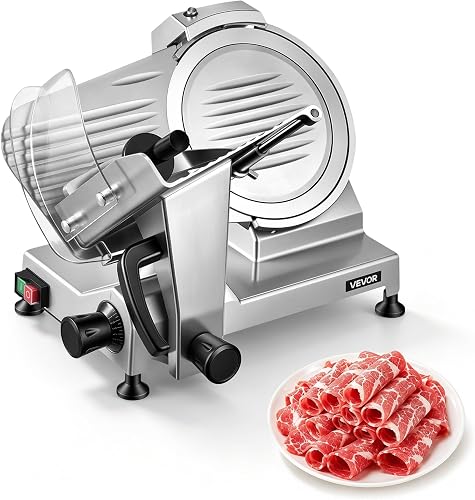
The KWS has a higher stated motor rating and a larger maximum slice thickness; the VEVOR has removable food-contact parts. These differences offer a useful reference point, but the VEVOR isn't a BESWOOD model.
The KWS has a 320W motor and adjusts to 14 mm. The VEVOR has a 240W motor and adjusts from 0 to 12 mm.
Both machines have 10-inch blades. The KWS blade is stainless steel; the VEVOR blade is carbon steel, and its built-in sharpening stone is included among its features.
The KWS weighs 37 lb, while the VEVOR weighs 34 lb. The VEVOR's blade, food holder and food pusher are removable; the KWS's removable parts include its carriage, blade and blade cover.
These are specification differences, not a claim that one machine performs better in every kitchen. Your food, batch size, counter space and cleaning routine should guide the choice.
How should you make the final choice?
Pick the KWS if its 320W motor, 14 mm adjustment range and removable parts match your needs. Wait to make a BESWOOD comparison until you have the exact model's specifications.
If portability and storage matter, compare the slicer's dimensions and weight with your available space. Compact meat slicers for home may suit a smaller kitchen.
If easy cleanup matters most, check the cleaning instructions and which parts come off.
For a wider overview of powered slicer choices, read how to choose an electric meat slicer. If you're considering a non-electric option, our guide explains what a manual meat slicer is; for counter placement, see what a countertop meat slicer is.
BESWOOD vs KWS meat slicer: which should you choose?
Choose the KWS 10NS when its verified features fit your workload; compare a BESWOOD only by its exact model specifications. Motor rating, blade, thickness range and cleanup needs give you a practical checklist for the decision.
The KWS has a 320W motor and adjusts to 14 mm, while the VEVOR offers a 240W motor and adjusts to 12 mm. Use those figures as a reference for what to compare, then verify the BESWOOD details before deciding.
Frequently asked questions
Is a BESWOOD or KWS meat slicer better?
The better choice depends on the exact models and your workload. The KWS 10NS has a 320W motor, a 10-inch stainless steel blade and thickness adjustment to 14 mm, but a fair BESWOOD comparison requires its model name and verified specifications.
What should I compare between BESWOOD and KWS slicers?
Compare motor power, blade material and size, thickness range, removable parts, cleaning directions, weight and support. Match those details to your usual foods and batch size, and check the manual for use and care instructions before buying.
Does a higher motor wattage mean a better slicer?
Motor wattage is one point of comparison, not a complete measure of slicing performance. The KWS 10NS is rated at 320W and the VEVOR at 240W, but blade design, food preparation, workload and cleaning needs also matter.
Can these slicers cut frozen meat?
The KWS is described for semi-frozen foods, and its guidance recommends partially freezing meat to –4°C for ultra-thin cuts. The VEVOR is described for frozen meat, but follow the exact model's instructions and avoid assuming every slicer handles fully frozen food.
How do you clean an electric meat slicer?
Unplug the slicer and follow its manual before removing parts or cleaning near the blade. Both the KWS and VEVOR specify hand washing; the KWS has a removable carriage, blade and blade cover, while the VEVOR has removable blade, food holder and pusher.