What Are the Parts of a Meat Slicer?
A meat slicer has a blade, food carriage, food pusher, thickness control, and safety parts. Together, they hold food steady, set slice thickness, and keep hands away from the cutting edge.
On this page (7 sections)
- What are the main parts of a meat slicer?
- How does the thickness control work?
- How do the carriage and food pusher work together?
- How should you clean and inspect slicer parts?
- Which helpful tools work alongside a meat slicer?
- Is a meat slicer a good fit for your kitchen?
- What should you remember about meat slicer parts?
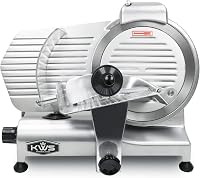
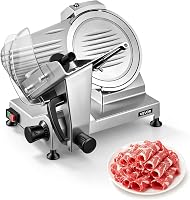
The main parts of a meat slicer are the blade, food carriage, food pusher, thickness control, and base with its motor and controls. These parts work together to guide food past the blade at a set thickness, while guards and safe handling help keep fingers away from the cutting edge.
Exact layouts vary by model, so use the manual for part names, removal steps, and cleaning directions. Our BESWOOD 250 slicer review looks at one specific model.
Knowing what each component does makes it easier to operate the slicer and spot parts that need attention.
What are the main parts of a meat slicer?
A meat slicer parts list usually includes the blade, carriage, pusher, gauge plate, base, and controls. Some models also have a blade cover, sharpening attachment, or other guards.
What does the blade do?
The circular blade cuts food as it moves past the edge. Keep the blade sharp and clean according to the manufacturer's instructions, and handle it with care during cleaning because its edge can cause serious cuts.
What is the food carriage?
The carriage is the sliding platform that supports food as you move it toward and past the blade. It may include a tray or fence that helps keep food in position.
What is the food pusher?
The food pusher holds food against the carriage and helps move it toward the blade. It also helps keep your hand farther from the cutting edge, so use it as instructed rather than pushing food directly by hand.
A replacement should fit the slicer securely and work with its carriage. See what to check when choosing a meat slicer food pusher.
What does the gauge plate do?
The gauge plate sits beside the blade and controls the gap food passes through. Adjusting the thickness control moves the plate to make slices thinner or thicker.
What are the base and controls for?
The base supports the slicer and houses its motor and operating controls. For a buying comparison of two machines, see BESWOOD vs KWS slicers.
Depending on the model, controls may include a power switch and a carriage lock.
What safety parts might a slicer have?
A slicer may have a blade cover, a guard near the blade, or a carriage lock. These parts help reduce exposure to the blade, but they don't make it safe to touch the edge or ignore the manual.
How does the thickness control work?
The thickness control adjusts the gap between the blade and gauge plate. A smaller gap makes thinner slices, while a wider gap makes thicker slices.
The control may be a dial or knob, often marked with numbers or measurements. Those markings can vary, so check your model's manual instead of assuming the same setting produces the same slice thickness on every machine.
Turn the slicer off before changing settings if the manual directs you to do so. Before cleaning or storing it, return the gauge plate to zero as instructed.
How do the carriage and food pusher work together?
The carriage supports the food, and the pusher guides it toward the blade. Keeping food stable helps you feed it in a controlled way.
Position food on the carriage according to the manual and secure it with the pusher or clamp. Keep fingers away from the blade path, especially when food becomes small or difficult to hold.
Don't force food through the blade. If it catches, stop and follow the manual's instructions for clearing the slicer.
How should you clean and inspect slicer parts?
Unplug the slicer before cleaning and follow its manual for removing parts. Clean food-contact areas promptly, take care around the blade, and dry each part before reassembling the machine.
If the blade is removable, use the specified tools and steps. Don't assume that a part is dishwasher-safe or that the motor base can be rinsed; check the manual first.
Inspect the pusher, carriage, gauge plate, and guards for cracks, looseness, or damage. Stop using a part that no longer fits securely, and replace it with one approved for your model.
A slicer is easier to manage when its moving parts, controls, and cleaning needs fit your kitchen routine. For a commercial model, compare Hobart meat slicers.
This guide to what to look for in a meat slicer explains how to compare those details before choosing a machine.
Which helpful tools work alongside a meat slicer?
A kitchen scale can help weigh sliced portions, while separate mixer attachments handle other prep tasks. These tools support food preparation, but they don't replace a meat slicer's blade, carriage, pusher, or thickness control.
The RUJIXU scale has a stainless steel platform and supports weight units including grams, kilograms, pounds, and ounces. Its digital display and tare function can help when weighing portions in a suitable container.
The RAFBAR attachment is a meat tenderizer for compatible stand mixers, with three thickness settings and a transparent cover. It tenderizes meat rather than slicing it into deli-style cuts.
The FavorKit set combines a meat grinder with a slicer-shredder attachment for compatible stand mixers. Its listed components include grinding plates, cutting blades, shredder cones, and sausage stuffer tubes, so it serves several prep tasks beyond slicing whole cuts on a meat slicer.
Is a meat slicer a good fit for your kitchen?
A meat slicer may suit you if you regularly slice foods and have space to use, clean, and store the machine safely. For smaller kitchens, compare compact meat slicers for home.
Consider the blade, carriage size, thickness control, removable parts, and safety features before buying.
The parts matter because they shape the routine: food must fit the carriage, the pusher must guide it, and removable components must be practical to clean. For a simple decision guide, read whether a meat slicer is good for home use.
What should you remember about meat slicer parts?
For everyday use, know the blade, carriage, pusher, gauge plate, and controls, then follow your manual for adjustment and cleaning. Choose a replacement pusher that fits your model, and stop using any damaged or loose component.
A scale helps with portion weights, while tenderizer and grinder-shredder attachments handle different jobs. Pick each tool for the task you need, and keep the slicer's own safety and care instructions close at hand.
Frequently asked questions
What are the main parts of a meat slicer?
Most meat slicers have a circular blade, a sliding food carriage, a food pusher or guard, a thickness control, and a base with a motor and controls. Some models also have a blade cover, sharpening attachment, or removable parts.
Check your manual because names and layouts differ.
What does the gauge plate do on a meat slicer?
The gauge plate sits beside the blade and sets the gap that determines slice thickness. Moving the thickness control adjusts that gap.
Set the plate to zero and follow the manual when the slicer is off and ready for cleaning or storage.
What is the food pusher for on a meat slicer?
The food pusher holds the food against the carriage and helps guide it toward the blade while keeping your hand farther from the cutting edge. Use it as directed, and don't feed small end pieces by hand.
Replace a cracked or poorly fitting pusher.
How do you clean meat slicer parts?
Turn off and unplug the slicer, then follow the manual for removing parts and accessing the blade. Wash removable food-contact parts with the approved method, clean carefully around the blade, and dry each part before reassembly.
Never immerse the motor base unless the manual allows it.