How to Sharpen Bread Slicer Blades
Bread slicer blade sharpening depends on the blade design. Use a built-in sharpener only as the manual directs; for serrated blades or blades without a compatible sharpener, ask the manufacturer or a qualified service technician.
On this page (7 sections)
- Can you sharpen a bread slicer blade at home?
- How can you tell which sharpening method fits?
- What safety steps should you take before sharpening?
- When should you use a sharpening service?
- Is sharpening by hand a good option?
- What should you do if slices are uneven?
- Which sharpening option should you choose?
Bread slicer blade sharpening depends on the blade design: use a built-in sharpener only if the equipment manual approves it, and send serrated or multi-blade units to a qualified service provider when the method is unclear. Unplug the machine and follow its lockout and blade-removal instructions before maintenance.
Bread slicers don't all use the same cutting edge. A countertop slicer may have a single round blade and a built-in sharpener, while a commercial bread machine may use a bank of narrow blades that requires specialized service.
Can you sharpen a bread slicer blade at home?
You can sharpen some bread slicer blades at home when the machine has a compatible sharpener and its manual explains the process. Otherwise, ask the manufacturer or a qualified technician before using a stone or handheld tool.
A built-in sharpening assembly is made to align with a particular blade. Follow the manual for positioning, contact time, cleaning, and safety steps.
Don't improvise with a grinder, file, or knife sharpener.
First identify the equipment and blade type. What a bread slicer blade is and how designs differ can help you recognize whether you're dealing with a circular blade, a serrated edge, or multiple fixed blades.
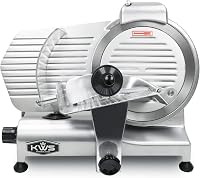
The KWS KitchenWare Station 10NS is a 10-inch meat slicer with a built-in dual whetstone sharpener. Its separately sold PerfectCut Bread Guide stabilizes loaves, but the manual should guide sharpening and confirm suitability for your setup.
How can you tell which sharpening method fits?
Match the method to the blade's shape and the equipment maker's instructions. A single circular blade, a serrated edge, and a multi-blade bread slicer may call for different tools or professional service.
Does a bread slicer have a serrated blade?
Some bread slicers use a serrated edge to cut through crust without crushing the loaf. Others use different blade designs, so inspect the equipment manual rather than assuming all bread slicers are serrated.
If you confirm the blade is serrated, read the guide to sharpening a serrated meat slicer blade. Its method applies only when the blade and equipment instructions support it.
The guide to when to use a serrated slicer blade explains why edge shape matters for different foods. Don't try to convert one edge type into another with a household tool.
Can a hand sharpener work on the blade?
A handheld sharpener can suit some kitchen knives, but that doesn't make it suitable for a slicer blade. Its edge geometry, size, and mounting may not match the tool's sharpening slot.
The AccuSharp Hand-Held Carbide Blade Sharpener is described for straight and serrated knives. It doesn't have a stated bread-slicer-specific use, so don't draw it across a slicer blade unless the equipment maker confirms compatibility.
For a closer look at tool choice, see meat slicer blade sharpener options. That guide is about meat slicer blades; check the bread slicer's manual before applying any method.
What safety steps should you take before sharpening?
Disconnect power, secure the machine, and follow its manual before touching or removing a blade. Sharp edges can cause serious cuts even when the slicer is switched off.
Unplug the cord, keep the work area dry, and make sure no one can reconnect the machine while you work. Wear cut-resistant gloves if the manual permits them, and keep fingers away from the cutting edge.
Use the blade guard and any supplied tool or holder as directed. If removing the blade requires a special tool or the instructions are unclear, stop and contact the manufacturer or a service technician.
Don't test sharpness with a fingertip. After sharpening, clean the blade and surrounding parts as directed, reinstall any covers, and confirm the machine is assembled before reconnecting power.
When should you use a sharpening service?
Use a qualified service provider when the blade is serrated, fixed in a multi-blade assembly, damaged, or not covered by clear sharpening instructions. A service technician can identify the correct method and whether a blade needs replacement.
Stop using a blade with chips, bends, heavy corrosion, or loose mounting. Sharpening can't safely correct every kind of damage, and a compromised blade can cut poorly or fail.
Ask the manufacturer which service centers handle your model and whether it sells replacement blades. For Cabela's models, see Cabela's slicer sharpening steps.
For a single circular blade, the guide on how to sharpen a meat slicer blade covers general considerations, but the bread slicer's own manual takes priority.
Is sharpening by hand a good option?
Hand sharpening is appropriate only when the equipment maker allows it and you can hold the blade securely with the correct tool. If either condition is uncertain, use a service provider.
A loose blade can shift during sharpening, and the wrong angle can change its cutting edge. Don't hold a blade in one hand while moving a sharpener with the other.
The guide to sharpening a meat slicer blade by hand explains the general approach for compatible blades. It isn't a substitute for the bread slicer's model-specific instructions.
The AccuSharp Hand-Held Carbide Blade Sharpener & ShearSharp is described for knives, including serrated knives, and general-purpose scissors. It has no stated use for bread slicer blades, so treat it as a kitchen tool for compatible knives rather than a slicer maintenance tool.
What should you do if slices are uneven?
Check the loaf, blade condition, and machine setup before sharpening. A soft or misshapen loaf, incorrect guide position, or loose parts can also cause ragged slices.
Follow the manual for loaf placement and any thickness or feed adjustments. Don't push the bread harder to force a cut; stop if the machine strains, vibrates unusually, or makes a new noise.
If the blade looks damaged or slice quality stays poor after approved cleaning and setup, stop using the machine and contact service. A sharpener can't fix a bent blade or a mechanical issue.
Which sharpening option should you choose?
For bread slicer blade sharpening, use the built-in sharpener when the manual gives a compatible procedure; choose professional service when blade design or condition is uncertain. A general kitchen sharpener is for compatible knives, not automatically for slicer blades.
Choose the KWS slicer if you need a meat slicer with a built-in dual whetstone sharpener and a separate bread guide option. Choose either AccuSharp tool only for compatible kitchen knives or scissors.
Start with the machine's make and model, then check its manual or contact the manufacturer. That decision keeps the sharpening method matched to the blade and helps you know when to replace it instead.
Frequently asked questions
Can you sharpen a bread slicer blade?
Some bread slicer blades can be sharpened with a compatible built-in attachment or by a qualified sharpening service. The right method depends on whether the blade is smooth, serrated, or part of a multi-blade bread slicer.
Check the equipment manual before sharpening or removing any blade.
Can I use a kitchen knife sharpener on a bread slicer blade?
Don't assume a handheld kitchen sharpener fits a bread slicer blade. Its shape, edge, and mounting can differ from a kitchen knife, and pulling a sharpener across an installed blade can be unsafe.
Use only a method approved by the equipment maker or a qualified service technician.
How do I know when a bread slicer blade needs sharpening?
Uneven slices, tearing, or extra force can signal that the blade needs attention, but they can also point to a dull or damaged blade, poor setup, or a loaf that is too soft. Stop using the machine if the blade is damaged, then check the manual or contact service.
How often should bread slicer blades be sharpened?
There is no single schedule for every bread slicer. Sharpening frequency depends on the blade design, workload, and maker's instructions.
Keep the blade clean and inspect slice quality; follow the manual's maintenance interval and use its approved sharpening method.