What to Look for in a Foldable Meat Slicer
The best foldable meat slicer for home use is one that folds to fit your storage space, sets up securely, and handles the foods you plan to slice. Check folded dimensions, setup steps, cleaning access and the maker’s instructions before choosing.
On this page (8 sections)
- What should you check in a foldable meat slicer?
- Does a foldable design make setup easier?
- What blade and cleaning details matter?
- Should you choose an electric or manual slicer?
- Are folding meat slicers for home use right for you?
- Can a foldable meat slicer handle frozen meat?
- What other features help in a small kitchen?
- How should you choose a foldable meat slicer?
The best foldable meat slicer for home use is one that fits your storage space when folded and sits securely when set up. Check its folded and operating dimensions, setup steps, cleaning access and suitability for the foods you plan to slice.
“Foldable” can describe different designs, so verify what actually moves and how the slicer is secured for use. A compact countertop slicer may still need a permanent shelf or a clear stretch of counter.
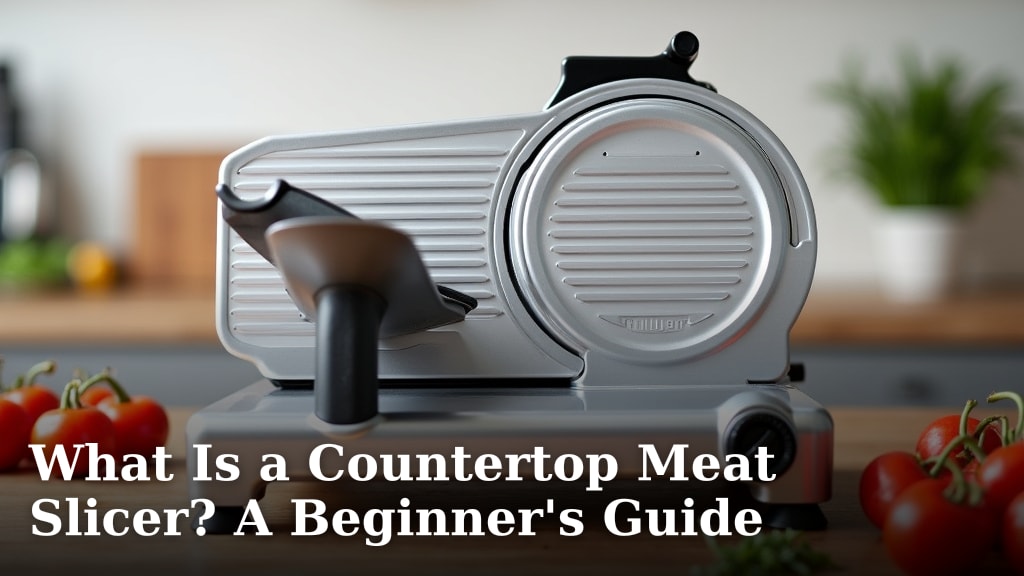
If you’re comparing countertop styles, start with What Is a Countertop Meat Slicer? A Beginner’s Guide.
It explains the basic layout and how an electric countertop model differs from other slicers.
What should you check in a foldable meat slicer?
Check folded size, setup, stability, cleaning and cutting needs before you compare convenience features. Those details determine whether a folding meat slicer will work in your kitchen day to day.
| Check | What to find out | Why it matters |
|---|---|---|
| Folded dimensions | Width, depth and height when stored | Confirms it fits your cabinet, shelf or drawer |
| Operating footprint | Counter space needed when set up | Prevents crowding near other appliances |
| Setup | Steps to unfold, secure and prepare it | Shows how much work each use involves |
| Stability | How it stays in place during slicing | Helps you judge whether the setup suits your counter |
| Cleaning access | Which parts can be removed and how to wash them | Helps you clean food-contact areas as directed |
| Cutting capacity | Foods, slice range and size limits | Matches the tool to the jobs you have planned |
Ask the seller or manufacturer for a folded measurement if it isn’t available. Don’t estimate storage size from a product photo or assume a slicer collapses in the same way as another model.
How do you measure a foldable meat slicer for storage?
Measure the actual folded slicer and the space where you’ll store it. Include protruding handles, knobs or guards if they remain in place after folding.
Check the opening to the storage spot as well as its interior dimensions. A slicer can fit inside a cabinet but still be awkward to lift through a narrow door.
Then measure the slicer fully set up. A model that stores neatly may take more counter space than you can spare while using it.
Does a foldable design make setup easier?
A folding design helps when you have a small, specific place to store the slicer, but it still needs a stable setup before each use. Check how the base, carriage and any moving parts are secured in the operating position.
Read the setup instructions before you buy. Look for the order of steps, any parts that must be fitted or removed, and whether the maker asks you to place the slicer on a particular surface.
Think through where you’ll set it up. Keep the area dry, level and clear enough for the food tray, your hands and any pieces that need to move.
If you expect to fold and unfold the slicer often, consider how you’ll handle it and where loose parts will go. A quick setup is useful only if you can repeat it without misplacing parts or blocking your workspace.
What blade and cleaning details matter?
Choose a slicer with a cleaning routine you can follow after every use. Check whether the blade, carriage, food guide and other food-contact parts are removable, and read the maker’s care instructions.
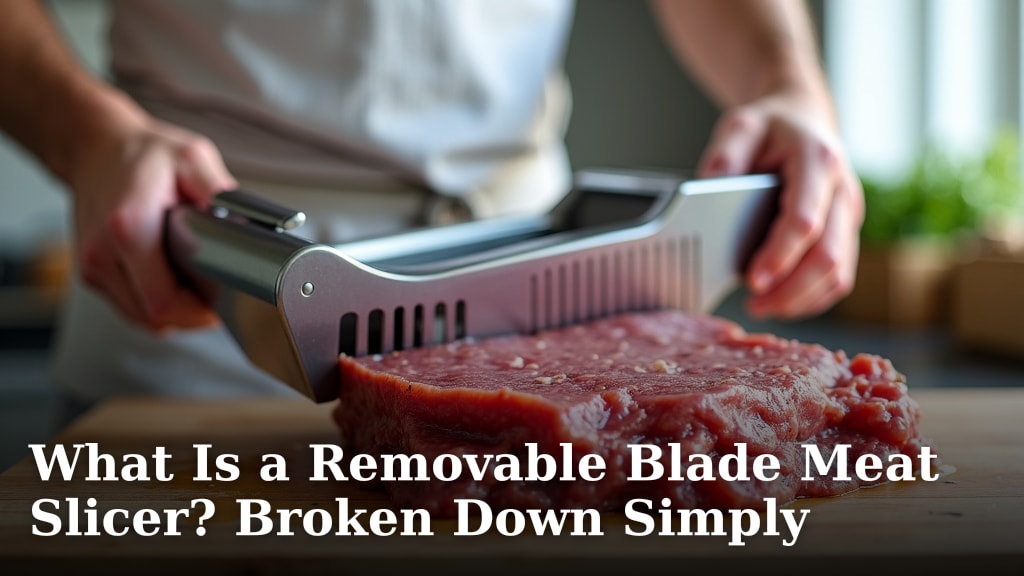
A removable blade can make access easier, but it also needs careful handling. Our guide to what a removable blade meat slicer is explains what to consider about that design.
Look for clear instructions on hand washing, drying and reassembly. Don’t assume parts are dishwasher safe or that a foldable design makes blade cleaning easier.
Before storing the machine, confirm which parts should be folded, removed or left assembled. Store the blade and accessories so they won’t be bumped or damaged.
Should you choose an electric or manual slicer?
Choose electric for repeated slicing with less hand effort, and consider manual when your tasks are specific and you’re comfortable operating it by hand. For a crank-operated option, see hand crank meat slicer.
The right type depends on the amount and kind of food you plan to prepare.
A countertop electric slicer can suit regular batches of meat, cheese or other foods if its capacity and care routine match your needs. For models that also handle bread, compare electric bread and meat slicers.
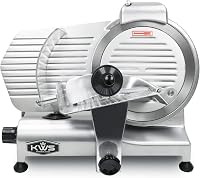
The KWS KitchenWare Station 10NS has a 10-inch stainless steel blade, adjustable thickness up to 14 mm, and a removable carriage, hand guard, blade and blade cover.
The Cuisinart Kitchen Pro has a 7.5-inch stainless steel blade and a slice control knob that adjusts from 1/32 to 1/2 inch. Its blade, food guide and stainless steel carriage are removable for cleanup.
A manual frozen-meat slicer is a different tool from an electric countertop model. The befen manual slicer is designed for frozen foods, has adjustable thickness from 0.2 to 20 mm, and measures 18.11 x 6.3 x 4.72 inches.
These examples are not confirmed foldable models. Compare them for their cutting method and features, then verify a product’s folding design and folded dimensions separately before buying.
Are folding meat slicers for home use right for you?
A folding meat slicer for home use may suit you if you need a slicer but lack room to keep it permanently on the counter. For hand-operated options, see manual meat slicers for home use.
It makes less sense if the folded machine is heavy, awkward to lift or still too large for your storage area.
Consider how often you’ll use it. If you slice only now and then, the time needed to set up, clean and put it away may matter as much as the slicing features.
If you want to compare options by where they’re made, see meat slicers for home use made in the USA. That guide addresses a different buying factor, so keep storage measurements in your checklist as well.
Can a foldable meat slicer handle frozen meat?
Use a slicer on frozen or semi-frozen meat only if the maker’s instructions allow it.
Different machines call for different preparation, and a folding design doesn’t indicate what foods the blade can handle.
The befen manual model is designed for frozen meat and calls for properly prepared meat to make clean cuts. For more options and advice on this task, read best meat slicer for frozen meat.
Don’t use a slicer on bone or food that the instructions exclude. Follow the specific model’s food preparation guidance, and clean it as directed after handling raw meat.
What other features help in a small kitchen?
Prioritize features that save counter space, setup time or cleanup effort. A folding frame can help with storage, while removable food-contact parts can make cleaning more manageable.
Consider where the slicer will be plugged in and whether you have enough clear counter space to use it safely. Keep the cord and any accessories organized so they don’t get caught when you move or fold the machine.
Think about the food you slice most. A wide thickness range may matter for deli-style cuts, while a manual model built for frozen meat may suit a narrower task better.
For a broader checklist covering blade size, controls and cleanup, see what to look for in a meat slicer. If you’re still weighing whether an appliance belongs in your kitchen, is a meat slicer good for home use? can help you decide.
How should you choose a foldable meat slicer?
Choose a model only after checking its folded size, setup and cleaning routine against your space and habits. A folding feature matters most when the slicer fits where you can store it and feels practical to get ready for each use.
Pick a model designed for the foods you prepare, then confirm its operating footprint and care instructions. If you mainly need a specific task such as thin frozen-meat slices, compare models built for that job; if you want broad countertop slicing, weigh the space and cleanup those machines require.
Frequently asked questions
What should I check before buying a foldable meat slicer?
Measure the slicer folded and set up, then compare both dimensions with your storage spot and counter. Check how it locks or stabilizes for use, how much setup it needs, and whether the blade and food-contact parts can be cleaned as directed.
Confirm that its cutting method suits the foods you plan to slice.
Are electric meat slicers foldable?
Some meat slicers may have a folding design, but don’t assume a countertop electric slicer folds just because it is compact. Check the model’s folded dimensions and setup instructions, and confirm that the slicer is designed to fold before planning to store it that way.
Can a foldable slicer cut frozen meat?
Only use a slicer for frozen or semi-frozen meat when its instructions allow it. A manual frozen meat slicer may need meat prepared to a specific firmness, while an electric model may have different limits.
Follow the maker’s preparation and cleaning instructions for the exact model.
How much storage space does a foldable meat slicer need?
Measure the slicer in its folded position, including anything that sticks out, then leave room to lift it in and out safely. Also measure its full setup footprint, since the counter space needed during use can be much larger than its stored size.