How to Choose a Hand Crank Meat Slicer
Choose a hand crank manual meat slicer by checking blade size, flywheel clearance, food capacity, thickness control and stability. Match those details to the foods you slice and the space available on your counter.
On this page (7 sections)
- What should you compare on a hand crank manual meat slicer?
- Which type of manual meat slicer fits your routine?
- What thickness adjustment do you need?
- How stable should a manual meat slicer be?
- What should you know about cleaning and storage?
- How much space does a hand crank slicer need?
- Which hand crank manual meat slicer should you choose?
A hand crank manual meat slicer is a fit when you want to move the blade by hand and can match its capacity to the food you slice. Compare blade size and flywheel clearance first, then check thickness control, stability, cleanup and the counter space needed to turn the handle.
The phrase can describe different designs. Some use a hand-turned circular blade and flywheel, while others use a hand-operated straight blade and carriage, so check the actual mechanism instead of relying on the name.
For a basic explanation of the category, start with What Is a Manual Meat Slicer? What You Should Know.
This guide focuses on the checks that help you choose the right style for your kitchen.
What should you compare on a hand crank manual meat slicer?
Compare blade size, flywheel clearance, cutting capacity, thickness control, and stability against the foods you expect to slice. These factors affect what fits and how much room you need to operate the machine.
| Check | What to look for | Why it matters |
|---|---|---|
| Blade size | Blade diameter or cutting length | Helps you judge whether the blade suits the food's width and shape |
| Flywheel clearance | Space around the wheel and handle | Gives your hand and food room during a full turn |
| Food carriage | Width, length and holding features | Affects how much food fits and how you can guide it |
| Thickness control | The adjustment range and how it's set | Determines the cut options available on that model |
| Base | Suction cups, feet or another stable setup | Helps keep the slicer in place on a suitable surface |
| Cleanup | Removable parts and care instructions | Shows how much disassembly and hand cleaning to plan for |
A hand crank slicer needs room to move as well as room to sit. Measure the counter area, including space for the handle's path and for your hand to hold and guide the food.
How does blade size affect a hand crank meat slicer?
Blade size helps you estimate how much cutting area is available, but it does not tell you the slicer's full capacity by itself. Check the carriage dimensions, blade exposure and clearance around the blade as well.
A longer blade may seem useful for larger foods, but the carriage can still limit how much fits. Small wheels, guards or nearby parts may also affect how food reaches the cutting edge.
Use the blade measurement to compare similar designs, then confirm the fit using a food size you actually plan to slice. A slicer that fits a compact piece of meat may not suit a wide roast or a long loaf.
Why check flywheel clearance?
Flywheel clearance matters because the wheel and handle need space to complete their rotation without hitting a wall, cabinet, backsplash or other item. The operator also needs room to turn the handle steadily.
Don't measure only the slicer's base. If possible, check the full path of the handle and wheel, including the space your hand takes as you turn it.
A large flywheel may affect both counter placement and storage. Consider whether you'll leave the slicer set up or need to move it after each use.
What capacity does the food carriage need?
Choose a carriage that can hold the foods you usually prepare, with enough room to position and guide them safely. If you prefer a wooden-base design, compare wooden meat slicers.
Match its dimensions with your typical cut rather than assuming a larger blade means a larger carriage.
Think about the food's shape and how it will sit against the guide or holder. A narrow block of meat, a wider piece of fish and a loaf of bread can all need different support.
For a manual slicer, holding food securely is part of the operating setup. Follow the model's instructions for its holder or guard, and don't push food into the blade by hand.
Which type of manual meat slicer fits your routine?
Choose a hand-turned rotary slicer if you want that design and have room for its flywheel. Consider a compact hand-operated slicer if you need a simpler manual setup for a particular food or task.
The product examples below illustrate different approaches to slicing. A mixer attachment is another setup to consider; see the KitchenAid meat slicer attachment.
The Cuisinart is electric, and the NutriChef is an electric carving knife, so neither is a hand crank slicer; they can still help if you're comparing ways to slice at home.
A hand-crank rotary slicer for a traditional setup
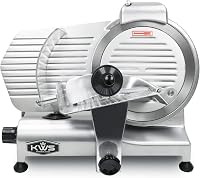
A rotary slicer uses a hand-turned wheel to move the blade. Before choosing one, check the wheel's diameter, handle clearance, base support and how the food is held near the blade.
This Cuisinart model has a slice control knob and removable blade, food guide and stainless steel carriage. It runs on a 130-watt motor, so it does not provide the hand-crank operation this guide describes.
Consider it if you want powered countertop slicing and a stated thickness range. If manual operation is your priority, compare rotary models directly and verify their handle layout and clearances.
See our guide to best manual meat slicer for home for home-use options.
A compact hand-operated slicer for very cold meat
A compact manual slicer can suit you if you want to cut meat into thin slices without using an electric motor. Check the instructions closely, since food preparation can affect how cleanly a manual blade cuts.
The befen is described for slicing frozen beef, lamb, chicken, ham and fish. Its guidance says to prepare the meat properly and not use fully thawed meat; the instructions also say not to slice bone.
The listed dimensions are 18.1 x 6.3 x 4.7 in, and the blade length is about 7.9 in. Those measurements can help you judge counter fit, though you should also leave space to operate the slicer and handle the food.
Consider it if you want manual slicing for properly frozen, boneless foods. Follow its instructions for setup, use and hand washing.
For operation and handling steps, see How to Use a Manual Meat Slicer.
An electric knife for carving rather than hand-crank slicing
An electric carving knife suits a different task: moving a serrated blade through cooked or prepared food with a powered handle. It does not provide the carriage and thickness adjustment of a countertop slicer.
The NutriChef has a safety lock and a wooden storage stand. It is an electric kitchen knife rather than a manual slicer, so consider it for carving if a crank-operated machine isn't what you need.
Consider it for carving and general kitchen cutting, not for choosing a hand crank meat slicer. If you want powered carriage-based slicing, compare the differences in [How Do You Choose an Electric Meat Slicer?
Worth Knowing](/how-do-you-choose-an-electric-meat-slicer/).
What thickness adjustment do you need?
Choose a slicer with a thickness range that matches how thin or thick you want each cut. Check the range and adjustment method on the exact model, because manual slicers do not all offer the same control.
The befen's stated adjustment range is 0.2 mm to 20 mm. The Cuisinart's range is 1/32 in to 1/2 in, but it is an electric model, so it is a comparison point rather than a hand-crank pick.
A wide range gives you more options on paper, but also consider how easy it is to set and repeat a thickness. If consistent slices matter, look for clear adjustment markings or instructions for setting the cut.
How can you compare slices in millimeters and inches?
Use a consistent unit when comparing models, or convert the measurements before deciding. For a quick reference, 1 mm is about 0.04 in, so a 0.2 mm cut is very thin and 20 mm is about 0.8 in.
The displayed range does not guarantee every food will cut cleanly at every setting. Food firmness, shape and preparation all affect the result, so follow the slicer's guidance for each type of food.
How stable should a manual meat slicer be?
A manual slicer should sit securely on a flat, suitable work surface while you operate the handle. Check how its base is designed to stay in place and whether the instructions specify any setup limits.
The befen includes suction cups, but a suction base depends on the surface and proper attachment. Clean and dry the counter as directed, then confirm the machine stays put before feeding food toward the blade.
Don't use a slicer that shifts during operation. Stop and check the setup, surface and attachment method before continuing.
What should you know about cleaning and storage?
Choose a slicer whose cleaning steps you can follow after each use. Check which parts come off, what needs hand washing and whether water must stay away from specific components.
The befen's care guidance says not to use a dishwasher and to keep certain screws, nuts, bearings and joints away from water. It also calls for cleaning the blade separately after use, so account for that maintenance before buying.
Remove food residue only as directed, and handle exposed blades carefully. Store the slicer where it won't be bumped or reached by children, and keep accessories together so they're ready for the next use.
For stainless steel options, compare the materials and care guidance in Best Stainless Steel Manual Meat Slicers.
How much space does a hand crank slicer need?
Measure the base, handle path and operating space around the machine before setting it on your counter. Include room to place food, keep a hand on the handle and remove parts for cleaning.
A compact footprint can be convenient, but a wall or appliance beside the slicer may block a full wheel rotation. Check the height too if the handle or flywheel rises above the counter.
If you need to store the slicer between uses, measure the storage shelf or cabinet opening. Include removable parts and accessories in your storage plan.
Compare the manual and powered countertop formats in What Is a Countertop Meat Slicer? A Beginner’s Guide.
Which hand crank manual meat slicer should you choose?
Choose a hand crank manual meat slicer by matching the blade and carriage to your food, then confirming flywheel clearance, thickness control, stability and cleanup. A compact manual model can suit properly prepared boneless meat, while a rotary design needs room for its wheel and handle.
If you want a fully manual setup, prioritize the actual crank mechanism and instructions over product naming. If you prefer powered slicing, compare a countertop slicer or carving knife based on the foods and cuts you make most often.
Frequently asked questions
What should I check before buying a hand crank meat slicer?
Check the blade size, flywheel clearance, food carriage capacity, thickness adjustment, base stability and cleaning steps. Compare the slicer's working dimensions with the food you plan to cut, then make sure you have room to turn the handle and support the food safely.
Is a manual meat slicer with a hand crank good for frozen meat?
Some manual slicers are designed for meat that is very cold or partly frozen, but follow the model's instructions for preparation. For the befen, the meat should be properly frozen and not fully thawed; it also should not contain bone.
Does a larger blade always make a better hand crank slicer?
A larger blade can offer more clearance for some foods, but it does not guarantee better cuts. Compare blade diameter with the size of your usual food and check the carriage, thickness range, stability and cleaning needs as well.
Can I use a hand crank slicer for foods other than meat?
Some manual slicers can handle foods such as fish, cabbage or onions, but each model has limits. Check its instructions and avoid bone or foods that are too soft for a clean cut; the befen's guidance recommends meat that is almost frozen.